
Some carpet problems respond to cleaning or repair; others signal worn construction, damaged cushion or conditions that deserve replacement. The right answer depends on the actual rooms, substrate and selected product, not a generic rule.
This replace carpet Atlanta guide gives Atlanta homeowners a disciplined way to compare conditions, product instructions, installation scope and long-term care before work begins.
Start with an in-home assessment rather than a sample alone. Impeccable Floors provides professional carpet services in Atlanta, and related planning guidance is available in our Atlanta flooring resource. When the room is measured and the substrate is visible, product recommendations become more specific and estimates become easier to compare.
Replace Carpet Atlanta: The Short Answer
Replacement is reasonable when wear, damage, odor or loss of structure cannot be corrected safely and economically. This is not a cosmetic technicality: Atlanta pollen, pets, stairs, sunlight and occupied-home traffic create different wear patterns. A useful evaluation therefore considers the room as an assembly, including the finish material, what supports it, the edges and transitions, and the way the household will use the space. For homeowners comparing options, the goal is not to make the project sound complicated; it is to identify the few conditions that change the decision before material is ordered.
During an in-home review, document fiber condition, matting, seams, backing, cushion, odor source, stains, subfloor and room use. Photographs, product records and a written history make that conversation more accurate. Conditions that cannot be seen should be labeled as unknown rather than guessed. That distinction lets the owner compare proposals fairly and prevents a low initial number from becoming the only measure of value.
Replace Carpet Atlanta: Practical Details to Confirm
The practical next step is to separate cleanable soil from permanent damage before choosing a new carpet. Product instructions and site conditions govern the final method, so the written scope should identify who verifies each dependency and when. Replacing only the visible surface without investigating moisture or contamination can repeat the problem. A careful sequence gives the installer time to stop, explain a discovery and obtain approval instead of covering it under schedule pressure.
Homeowners can help by asking what evidence supports the recommendation, which current instructions apply, how transitions will be finished and what would trigger a change. That approach produces a plan that is understandable without pretending every concealed condition is predictable. It also creates a better record for future cleaning, repairs or renovation.

Permanent matting and crushed traffic lanes
The central issue is that carpet that no longer responds to professional cleaning may have physical fiber damage rather than removable soil. In metro Atlanta, hallways, doorways and stairs concentrate foot pressure and abrasion. The visible sample is only one part of the installed result. Substrate, moisture, room geometry, fixed objects and daily traffic all influence whether the selected system remains quiet, cleanable and serviceable.
A professional assessment should review pile recovery, twist, density, shading direction and contrast between protected and traveled areas. The purpose is to separate observations from assumptions. Measurements and product documents should guide the recommendation; marketing shorthand should not. Where conditions are concealed, the proposal can state a reasonable allowance and a clear approval process instead of promising certainty.
Putting It Into Practice: Permanent matting and crushed traffic lanes
Use the findings to compare cleaned test areas and construction condition in normal room light. This makes the sequence easier to manage and gives every trade the same target. Assuming every dark path is dirt can lead to repeated cleaning without structural improvement. If a recommendation changes after demolition, the reason should be visible, documented and connected to the requirements of the final system.
A homeowner does not need to become an installer to ask strong questions. Request the product name, approved location, preparation standard, transition plan and care requirements. Then compare complete scopes. A proposal that explains preparation and limitations is more useful than a price that leaves those decisions for installation day.

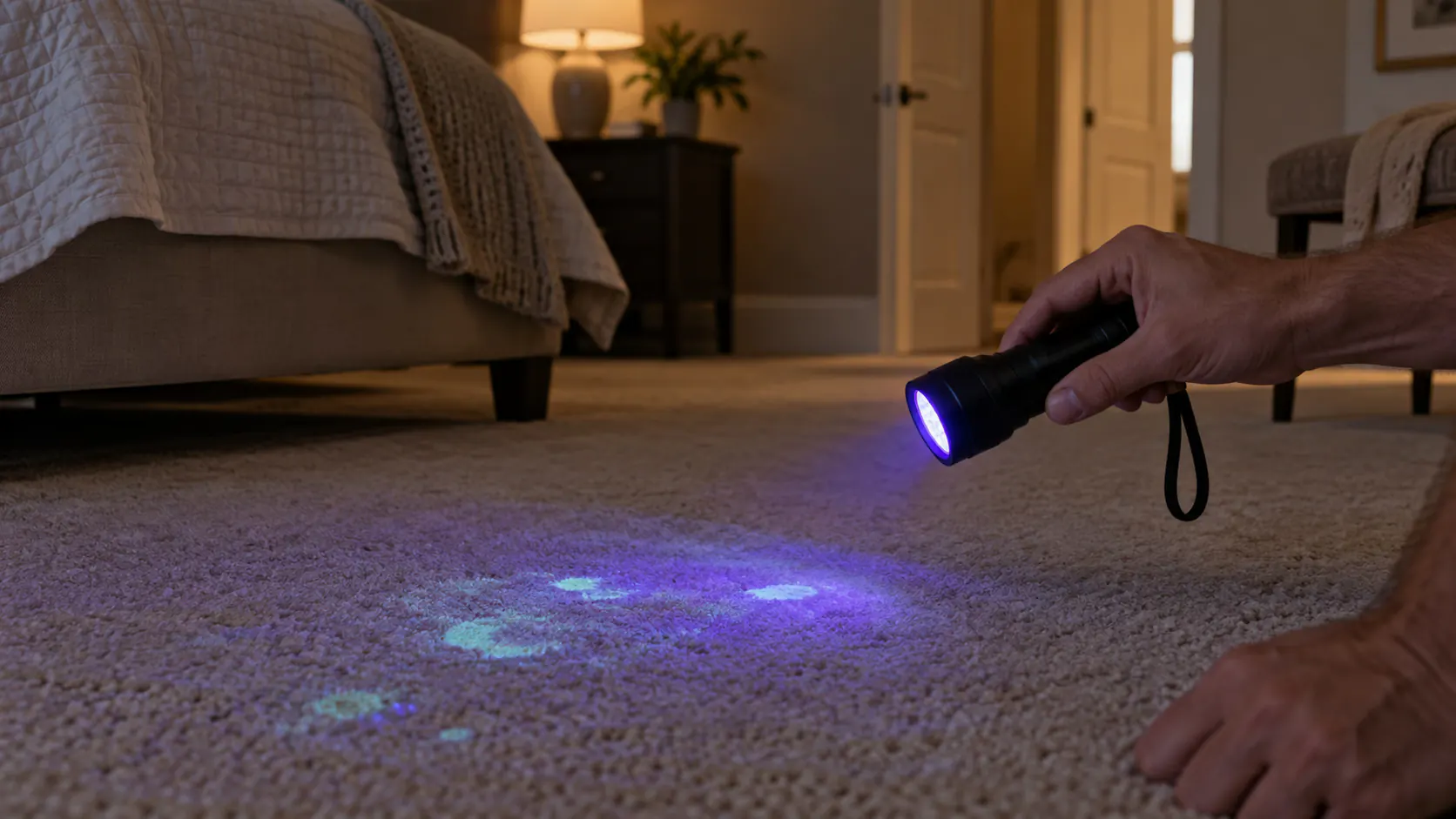
Stains, odor and pet contamination
The source and depth of contamination determine whether cleaning, localized repair or replacement is appropriate. That principle matters because liquid can move through carpet into cushion, seams and wood or concrete below. The strongest plan connects technical requirements to the actual household: who uses the room, where water or grit enters, what furniture remains and how the space must function during work.
Before selecting the final approach, inspect odor by humidity level, affected area, backing, cushion, tack strip, base and substrate. Record what is measured, what is observed and what remains concealed. This creates a factual baseline for product selection, scheduling and cost. It also reduces the chance that two proposals appear comparable while assigning different responsibilities.
Decision Point for Stains, odor and pet contamination Projects
The recommended action is to remove layers carefully and address the source before installing new material. Current manufacturer instructions, recognized methods and local requirements take priority over generic advice. Masking odor with fragrance or replacing carpet over contaminated cushion rarely solves the condition. When several methods could work, compare serviceability, disruption and future repair, not only the fastest installation.
Finish the decision with a short written checklist: approved product, substrate or assembly, preparation, transition, moisture strategy, responsible party and completion criteria. That record helps the crew and gives the homeowner a practical reference after the project. Good documentation is part of craftsmanship because it makes the reasoning behind the finished surface clear.
Loose seams, ripples and damaged edges
Some installation-related problems can be repaired when the carpet remains otherwise serviceable. This is not a cosmetic technicality: humidity, movement, weak seams and furniture handling can reveal defects over time. A useful evaluation therefore considers the room as an assembly, including the finish material, what supports it, the edges and transitions, and the way the household will use the space. For homeowners comparing options, the goal is not to make the project sound complicated; it is to identify the few conditions that change the decision before material is ordered.
During an in-home review, document seam integrity, stretch, delamination, tack strip, doorway edges and remaining material strength. Photographs, product records and a written history make that conversation more accurate. Conditions that cannot be seen should be labeled as unknown rather than guessed. That distinction lets the owner compare proposals fairly and prevents a low initial number from becoming the only measure of value.
Loose seams, ripples and damaged edges: Practical Details to Confirm
The practical next step is to obtain a repair assessment before assuming full replacement is required. Product instructions and site conditions govern the final method, so the written scope should identify who verifies each dependency and when. Restretching degraded backing may not hold and can postpone an inevitable replacement. A careful sequence gives the installer time to stop, explain a discovery and obtain approval instead of covering it under schedule pressure.
Homeowners can help by asking what evidence supports the recommendation, which current instructions apply, how transitions will be finished and what would trigger a change. That approach produces a plan that is understandable without pretending every concealed condition is predictable. It also creates a better record for future cleaning, repairs or renovation.

Worn stairs and safety concerns
The central issue is that stairs deserve separate evaluation because nosings and turning points receive concentrated wear. In metro Atlanta, a loose edge or severely worn tread can become a trip concern. The visible sample is only one part of the installed result. Substrate, moisture, room geometry, fixed objects and daily traffic all influence whether the selected system remains quiet, cleanable and serviceable.
A professional assessment should review attachment, pile at nosings, seams, transitions, stair shape and railing access. The purpose is to separate observations from assumptions. Measurements and product documents should guide the recommendation; marketing shorthand should not. Where conditions are concealed, the proposal can state a reasonable allowance and a clear approval process instead of promising certainty.
Putting It Into Practice: Worn stairs and safety concerns
Use the findings to plan stair carpet, pad and edge details as a dedicated part of the project. This makes the sequence easier to manage and gives every trade the same target. Using a room-only product or estimate can omit stair labor and durability needs. If a recommendation changes after demolition, the reason should be visible, documented and connected to the requirements of the final system.
A homeowner does not need to become an installer to ask strong questions. Request the product name, approved location, preparation standard, transition plan and care requirements. Then compare complete scopes. A proposal that explains preparation and limitations is more useful than a price that leaves those decisions for installation day.

Allergies, pollen and cleaning reality
Flooring choice should be paired with a maintenance routine the household can sustain. That principle matters because Atlanta outdoor pollen enters on shoes, pets, clothing and ventilation. The strongest plan connects technical requirements to the actual household: who uses the room, where water or grit enters, what furniture remains and how the space must function during work.
Before selecting the final approach, inspect vacuum performance, filter maintenance, cleaning frequency, moisture history and product emissions information. Record what is measured, what is observed and what remains concealed. This creates a factual baseline for product selection, scheduling and cost. It also reduces the chance that two proposals appear comparable while assigning different responsibilities.
Decision Point for Allergies, pollen and cleaning reality Projects
The recommended action is to choose cleanable construction and establish regular dry-soil removal and approved deep cleaning. Current manufacturer instructions, recognized methods and local requirements take priority over generic advice. Promising that one flooring material will cure allergies oversimplifies health and indoor-air factors. When several methods could work, compare serviceability, disruption and future repair, not only the fastest installation.
Finish the decision with a short written checklist: approved product, substrate or assembly, preparation, transition, moisture strategy, responsible party and completion criteria. That record helps the crew and gives the homeowner a practical reference after the project. Good documentation is part of craftsmanship because it makes the reasoning behind the finished surface clear.

The cushion under the carpet
Cushion affects feel, support and how the carpet responds to traffic. This is not a cosmetic technicality: a worn or contaminated pad can remain hidden while the surface looks acceptable. A useful evaluation therefore considers the room as an assembly, including the finish material, what supports it, the edges and transitions, and the way the household will use the space. For homeowners comparing options, the goal is not to make the project sound complicated; it is to identify the few conditions that change the decision before material is ordered.
During an in-home review, document density, thickness, compression, seams, staining and compatibility with the selected carpet. Photographs, product records and a written history make that conversation more accurate. Conditions that cannot be seen should be labeled as unknown rather than guessed. That distinction lets the owner compare proposals fairly and prevents a low initial number from becoming the only measure of value.
The cushion under the carpet: Practical Details to Confirm
The practical next step is to replace unsuitable cushion and follow carpet warranty requirements. Product instructions and site conditions govern the final method, so the written scope should identify who verifies each dependency and when. Choosing the softest or thickest pad without compatibility review can reduce carpet support. A careful sequence gives the installer time to stop, explain a discovery and obtain approval instead of covering it under schedule pressure.
Homeowners can help by asking what evidence supports the recommendation, which current instructions apply, how transitions will be finished and what would trigger a change. That approach produces a plan that is understandable without pretending every concealed condition is predictable. It also creates a better record for future cleaning, repairs or renovation.
What removal may reveal
The central issue is that carpet replacement is also an opportunity to inspect the substrate and prior repairs. In metro Atlanta, old pet damage, moisture, loose panels and adhesive can remain concealed until demolition. The visible sample is only one part of the installed result. Substrate, moisture, room geometry, fixed objects and daily traffic all influence whether the selected system remains quiet, cleanable and serviceable.
A professional assessment should review subfloor staining, squeaks, fasteners, cracks, perimeter condition and transition height. The purpose is to separate observations from assumptions. Measurements and product documents should guide the recommendation; marketing shorthand should not. Where conditions are concealed, the proposal can state a reasonable allowance and a clear approval process instead of promising certainty.
Putting It Into Practice: What removal may reveal
Use the findings to allow time for documented repairs before new cushion covers the area. This makes the sequence easier to manage and gives every trade the same target. Same-day assumptions can pressure crews to conceal conditions that need attention. If a recommendation changes after demolition, the reason should be visible, documented and connected to the requirements of the final system.
A homeowner does not need to become an installer to ask strong questions. Request the product name, approved location, preparation standard, transition plan and care requirements. Then compare complete scopes. A proposal that explains preparation and limitations is more useful than a price that leaves those decisions for installation day.
Choosing the new carpet for each room
Fiber, pile and color should match traffic, pets, cleaning and comfort expectations. That principle matters because bedrooms, stairs, family rooms and rental spaces place different demands on carpet. The strongest plan connects technical requirements to the actual household: who uses the room, where water or grit enters, what furniture remains and how the space must function during work.
Before selecting the final approach, inspect construction, density, twist, pattern, warranty, stain treatment and sample appearance in home light. Record what is measured, what is observed and what remains concealed. This creates a factual baseline for product selection, scheduling and cost. It also reduces the chance that two proposals appear comparable while assigning different responsibilities.
Decision Point for Choosing the new carpet for each room Projects
The recommended action is to compare full specifications and larger samples rather than choosing by softness alone. Current manufacturer instructions, recognized methods and local requirements take priority over generic advice. A plush showroom feel does not guarantee the best traffic performance. When several methods could work, compare serviceability, disruption and future repair, not only the fastest installation.
Finish the decision with a short written checklist: approved product, substrate or assembly, preparation, transition, moisture strategy, responsible party and completion criteria. That record helps the crew and gives the homeowner a practical reference after the project. Good documentation is part of craftsmanship because it makes the reasoning behind the finished surface clear.

A carpet replacement planning checklist
Measurement, furniture, doors, stairs, seams, disposal and transitions should appear in the scope. This is not a cosmetic technicality: installation day is smoother when the household knows which rooms and paths must be clear. A useful evaluation therefore considers the room as an assembly, including the finish material, what supports it, the edges and transitions, and the way the household will use the space. For homeowners comparing options, the goal is not to make the project sound complicated; it is to identify the few conditions that change the decision before material is ordered.
During an in-home review, document room dimensions, seam plan, closets, furniture, electronics, pets, baseboards and leftover stock. Photographs, product records and a written history make that conversation more accurate. Conditions that cannot be seen should be labeled as unknown rather than guessed. That distinction lets the owner compare proposals fairly and prevents a low initial number from becoming the only measure of value.
A carpet replacement planning checklist: Practical Details to Confirm
The practical next step is to confirm responsibilities and sequence in writing before material is ordered. Product instructions and site conditions govern the final method, so the written scope should identify who verifies each dependency and when. A price without stairs, furniture or disposal can be difficult to compare. A careful sequence gives the installer time to stop, explain a discovery and obtain approval instead of covering it under schedule pressure.
Homeowners can help by asking what evidence supports the recommendation, which current instructions apply, how transitions will be finished and what would trigger a change. That approach produces a plan that is understandable without pretending every concealed condition is predictable. It also creates a better record for future cleaning, repairs or renovation.
Frequently Asked Questions About replace carpet Atlanta
How often should carpet be replaced?
There is no universal interval. Construction, traffic, cleaning, pets, sunlight, moisture and installation quality determine service life.
Can matted carpet be restored?
Cleaning may lift soil and improve appearance, but physically crushed or untwisted fibers may not recover.
Does pet odor mean the subfloor is damaged?
Not always, but liquid can reach cushion and substrate. Removal and inspection may be necessary to identify the source.
Can carpet ripples be repaired?
Eligible carpet may be restretched after the cause and backing condition are evaluated.
Should carpet cushion always be replaced?
New compatible cushion is usually planned with replacement, especially when the old pad is worn, compressed, stained or contaminated.
Can we stay home during carpet replacement?
Often, with safe room sequencing and plans for furniture, pets and access.
What should an estimate include?
Material, waste, cushion, removal, disposal, stairs, seams, furniture, transitions, preparation and responsibilities should be clear.
Updated July 27, 2026. Verify current product instructions, site conditions and jurisdiction requirements for the actual property.
Editorial references: Review the Carpet and Rug Institute indoor-air-quality resource and EPA indoor-air-quality guidance. These official resources provide context; the selected product instructions and project conditions control the final installation.