
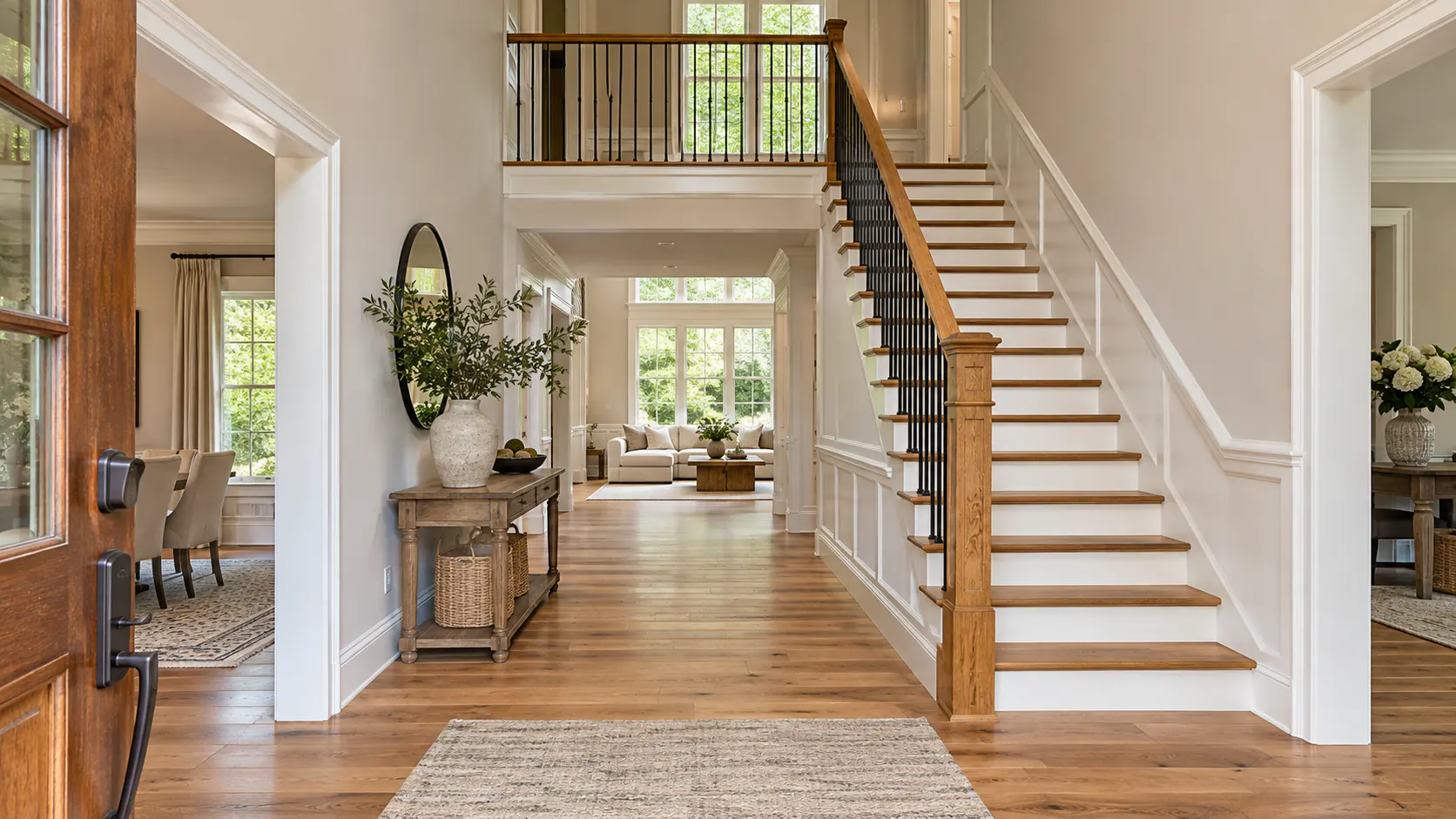
Few upgrades change the first impression of a house as quickly as a staircase that goes from tired carpet to warm hardwood. It is also one of the most detailed jobs in flooring, because a staircase is a series of small, exposed surfaces where every cut, edge and color difference shows.
This guide to carpet to hardwood stairs in Atlanta explains what usually hides under stair carpet, the realistic ways to get a wood staircase, and the decisions that should be settled before anyone pulls the first staple.
Carpet to Hardwood Stairs Atlanta: The Short Answer
Most carpeted staircases in Atlanta need new hardwood treads, not just a cleanup of what is underneath. Builders usually install construction-grade treads meant to be covered. The best result comes from new solid treads, finished risers, a matching landing nosing and railings planned at the same time.
Pulling up stair carpet is easy. Turning what is underneath into a staircase you would want guests to see is the part that takes planning. In many metro Atlanta homes built from the 1980s onward, the treads under the carpet are pine, plywood or particleboard with rough edges and dense rows of staples. A few older intown homes reveal real oak treads that were covered decades ago, and those can sometimes be repaired and refinished.
So the honest first step is not choosing a stain color. It is finding out what you actually have. A quick look under the carpet at the top step, or under a corner where the carpet wraps the nosing, usually answers the question. From there, the choice is between replacing treads, installing retrofit treads over the existing structure, or refinishing original wood that is already there.
The decision also involves more than the steps themselves. Stairs connect two floors, so the treads should relate to the flooring above and below, and the railing system is easiest to change while the staircase is already open. We cover each of these pieces below so the project is planned as one coordinated upgrade.
What is under the carpet on your stairs?
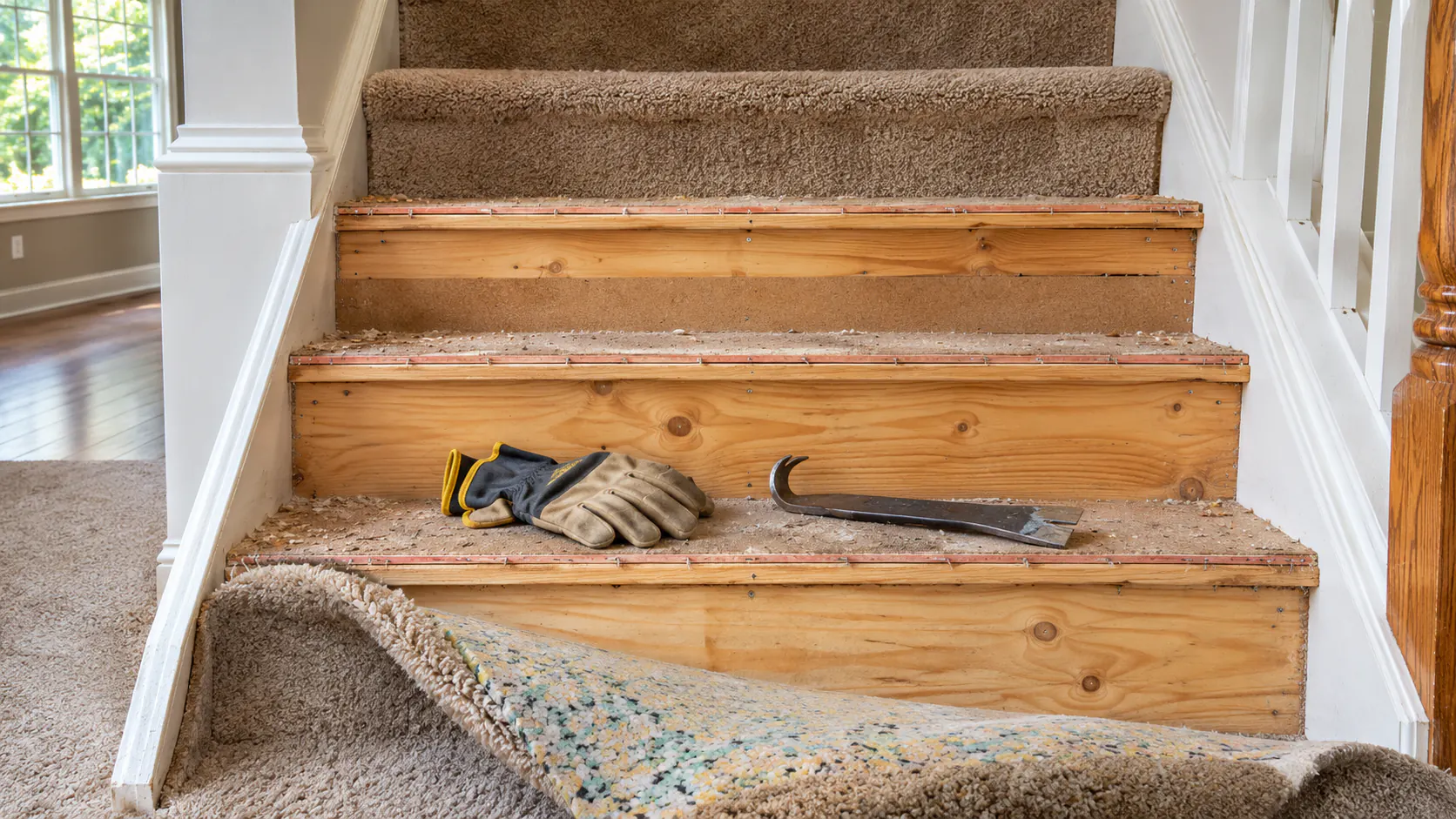
Stairs built to be carpeted are designed for cushion and fabric to hide everything. That is why the surface under the carpet rarely looks like a finished staircase, even in an expensive home.
Builder-grade treads and plywood
The most common discovery is a tread made from construction lumber, plywood or particleboard. These materials are structurally adequate, but they have no finished nosing profile, visible knots or voids, and edges chewed by tack strips and staples. Sanding cannot turn particleboard into hardwood, and plywood veneer is too thin to sand and stain like a real tread. These stairs need new wood on top or in place of the old treads.
Original hardwood under old carpet
Some older houses, especially pre-war and mid-century homes in established Atlanta neighborhoods, have oak treads that were carpeted later. If the wood is solid, sound and not cut down to accept the carpet, refinishing may be possible. Expect staple holes, paint drips along the edges and stain from old pad adhesive. A professional can tell you whether the damage will sand out or whether replacement treads will look better.
Risers, skirt boards and the nosing edge
Risers, the vertical faces between treads, are often plain plywood or drywall-grade material. Most homeowners paint them or cover them with new wood risers. Skirt boards along the wall, and the overhanging nosing on each tread, also need attention, because carpet hid gaps where these pieces meet.
Clues before you pull the carpet
You can learn a lot without removing anything. Lift the carpet at the back of the top step or inside a closet under the stairs, and look at the edge of a tread from the side. Visible plywood layers or a speckled particleboard edge mean replacement treads. A solid edge with real grain is worth a closer look by a professional.
Squeaks and structure
Removing carpet exposes movement that the cushion muffled. Loose treads, worn stringers or missing glue blocks should be corrected before new wood goes on. Our subfloor preparation guide explains why the structure under any floor matters as much as the surface you see.
Your main options for a hardwood staircase
Most carpet to hardwood stair projects in Atlanta follow one of three practical paths, and many combine them. The right choice depends on the existing structure, the floor you are matching and the budget for detail work.
Full tread and riser replacement
The old treads are cut out or removed and new solid hardwood treads are installed, usually with new wood or primed risers. This gives the cleanest result, full control of the nosing profile and the best match to a hardwood floor. It also allows squeaks and uneven steps to be corrected while the stairs are open.
Retrofit treads over the existing steps
When the existing treads are solid and well attached, the nosing can be cut back and thinner retrofit treads glued and fastened over them. This avoids full demolition but changes step heights slightly, so the top and bottom steps need careful planning to keep rises consistent. Retrofit systems vary widely in quality, so the tread thickness and attachment method matter.
Refinishing original hardwood treads
When real hardwood treads are already there, sanding and refinishing can be the most economical route. Each tread is sanded by hand or with detail equipment, damaged pieces are replaced, and the finish is applied with drying time between coats. This works best when the treads have not been cut down for carpet and when the color can be matched to adjoining floors through hardwood floor refinishing.
| Option | Best when | Watch for |
|---|---|---|
| New solid treads and risers | Builder-grade treads, squeaks or a new hardwood floor to match | More demolition and detail carpentry |
| Retrofit treads | Existing treads are solid and flat | Changed rise at top and bottom steps |
| Refinish original treads | Real oak treads in good condition | Staple damage, cut nosings, color match |
| Hardwood with a runner | Pets, kids or a quieter staircase | Runner width, fastening and cleaning |
| Painted treads | A casual or cottage look | Paint wears faster than a floor finish |
Not sure what is under your stair carpet?
We can look at the treads, risers, nosings and railings and explain which option fits your staircase before you commit to anything.
Request a Free Stair Assessment →Matching the stairs to your floors
A staircase almost never stands alone. It meets a foyer or living area at the bottom and a hallway or landing at the top, so the treads need to belong with those floors.
Species, grade and stain
Oak is the usual choice for stair treads because it is widely available in tread profiles, takes stain predictably and has a grain that hides daily wear. If your floors are red oak, white oak treads stained the same color can still look different because the two species carry different undertones. Bring a loose floor board or a photo in daylight to the selection, and test the stain on the actual tread species. Our guide to hardwood floor stain colors explains why the same stain can look warmer or cooler from one wood to the next.
Landing nosings and transitions
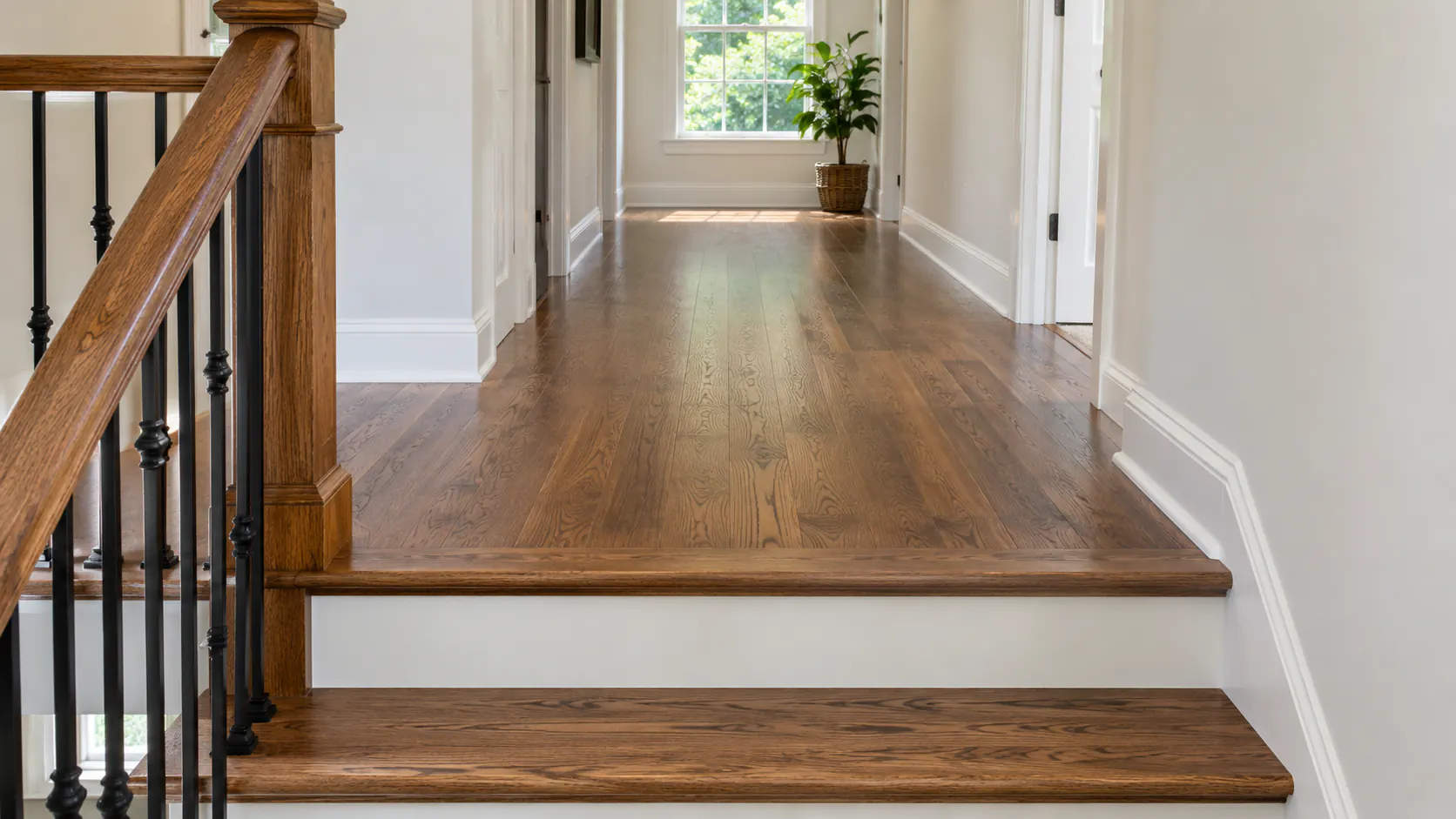
Where the top step meets the upstairs floor, a landing nosing finishes the edge. A flush nosing, milled to sit level with the floor boards, looks far better than a bulky overlap trim. It has to be ordered or milled to match the floor thickness, which is easier when the stairs and the floor are planned together.
Engineered floors and solid treads
Many Atlanta homes have engineered hardwood on slab foundations or wide-plank floors. Stair treads are usually solid wood, so the stain and finish must be coordinated to look like one surface. Some manufacturers offer matching treads and nosings for their engineered collections. Read our comparison of engineered vs solid hardwood if you are replacing the main floors at the same time.
Painted or wood risers
White or off-white painted risers are popular because they brighten the staircase and make each tread read clearly from below. Wood risers create a warmer, more traditional look but show scuffs from shoes differently. Painted skirt boards and stringers usually follow the riser decision.
- Compare tread samples beside the actual floor, not on a showroom display.
- Decide on painted or wood risers before ordering material.
- Order flush landing nosings that match the floor thickness.
- Plan the finish sheen to match the floors, usually matte or satin.
- Keep a spare tread from the same order for future repairs.
Balusters, newel posts and handrails
Railings are the most visible part of a staircase after the treads. Because the stairs are already open during a tread project, it is the natural time to update them.
Swapping wood spindles for iron balusters
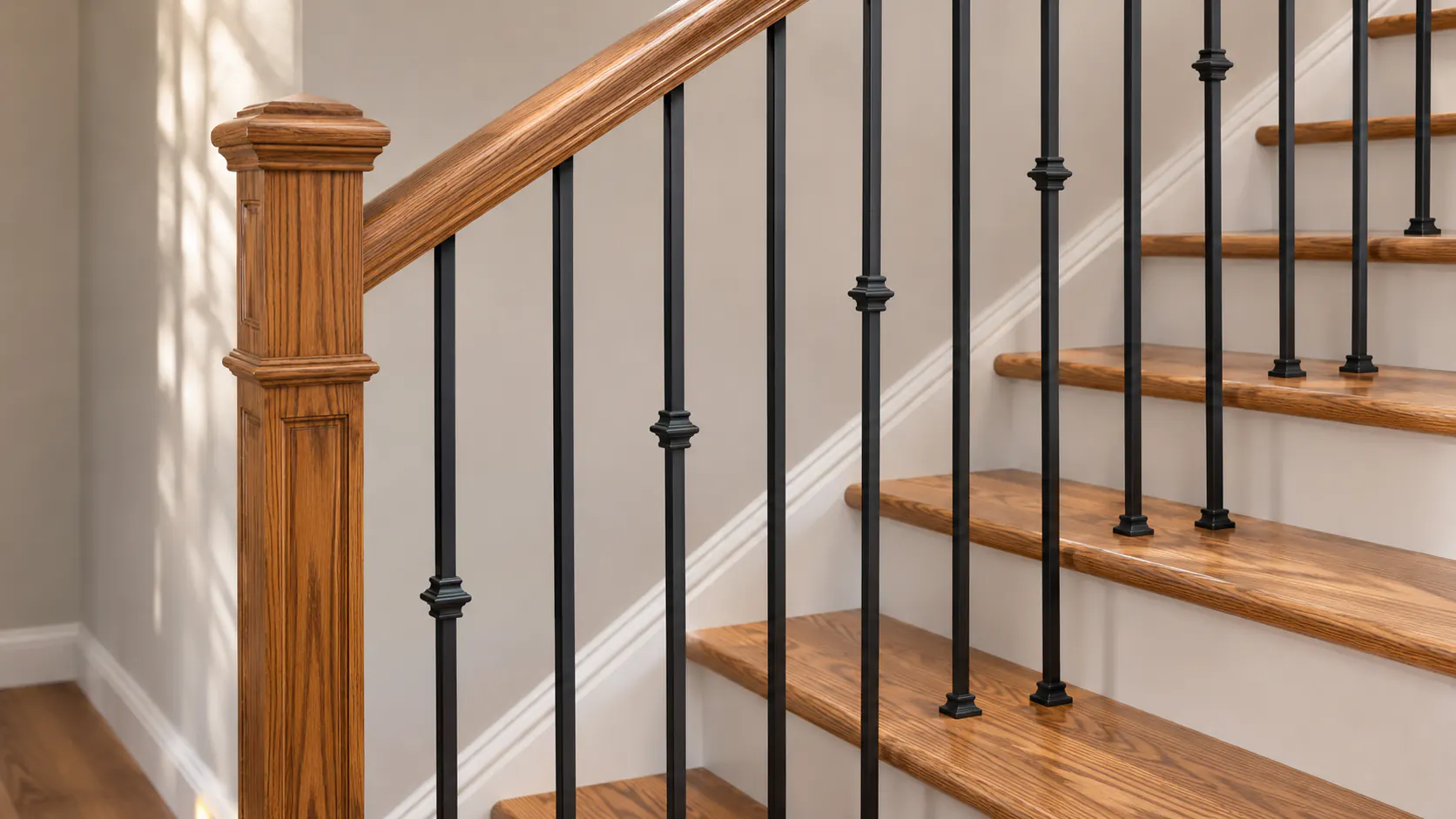
Replacing painted wood spindles with iron balusters is one of the most requested stair upgrades in Atlanta homes. Iron balusters come in plain, twisted, knuckle, basket and scroll styles, and in finishes from satin black to bronze tones. They are set into the treads and the handrail, so the hole layout is planned with the new treads rather than patched in afterward.
Newel posts and handrails
The newel post anchors the railing at the bottom of the stairs and at turns. A box newel creates a substantial, classic look; a simpler square post suits transitional and modern homes. Handrails can be stained to match the treads or painted to match the trim. Before you decide, try different combinations in our online stair designer, which lets you choose a staircase, balusters and a newel post and see them together.
Safety and local requirements
Handrail height, baluster spacing and guard requirements are set by the building code adopted in your jurisdiction. Any change to the railing system should keep the staircase compliant, and some projects may involve your local permit office. A qualified installer will build to those requirements and tell you when a design choice would not meet them.
Safety, slip resistance and noise
Carpet hides small irregularities and softens every step. Hardwood is firmer, brighter and more revealing, so a few details deserve attention for daily use.
Consistent rise and run
People notice a step that is slightly taller or shorter than the others, often by tripping on it. When treads are replaced or overlaid, the new thickness changes the rise at the top and bottom steps. Planning tread thickness and landing details keeps the steps even, which is one of the main reasons stair work is not a simple flooring add-on.
Slip resistance
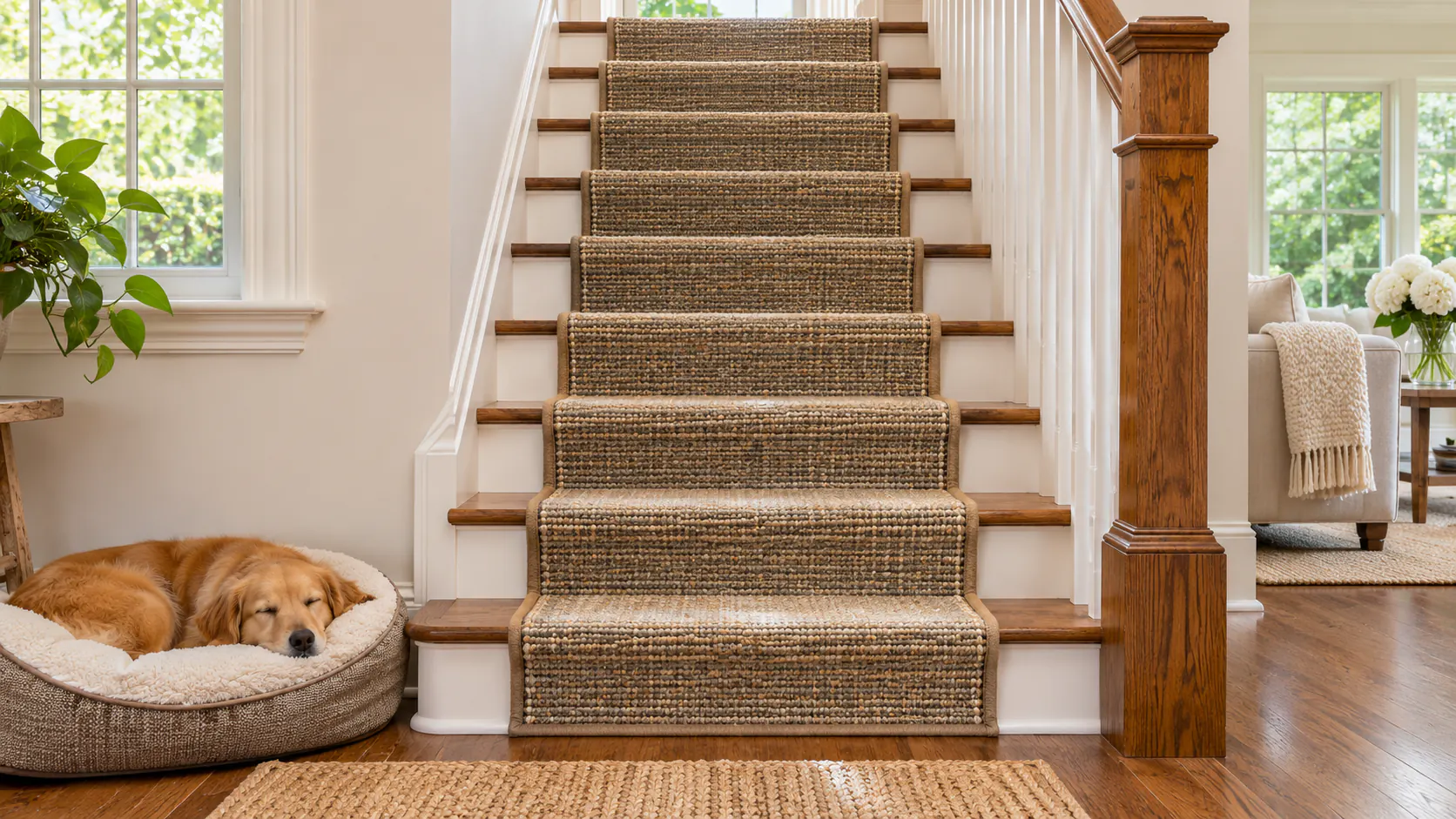
A smooth, glossy finish is more slippery than matte or satin, especially for socks and pet paws. A lower sheen, a light texture or a stair runner improves grip. Outdoor shoes bring in fine grit and red clay dust, so a mat at the bottom of the stairs also protects the finish.
Noise and squeaks
Hardwood stairs transmit footsteps more than carpeted ones. Proper adhesive and fastening, tight joints at risers and stringers, and solid support under each tread reduce squeaks. A runner further quiets a staircase that leads to bedrooms.
Pets and busy households
Dogs often lose traction on new hardwood stairs. Keeping nails trimmed, choosing a forgiving matte finish and adding a runner usually solves it. Mid-tone stains also hide scratches and pet hair better than very dark or very light colors. If you are weighing flooring for pets throughout the house, our carpet, pets and allergies guide covers the trade-offs.
Planning stairs and floors together?
Coordinating treads, nosings and new hardwood in one project avoids color mismatches and awkward transitions. We can scope both in one visit.
Schedule My Free Estimate →How a carpet to hardwood stair project is done
The exact sequence depends on the option chosen, but most projects follow the same broad steps.
Removal and inspection
Carpet, pad, tack strips and every staple come out. The crew checks the treads, stringers and risers for movement, damage or past repairs, and confirms the option agreed in the estimate still makes sense. Discoveries are discussed before work continues, not covered over.
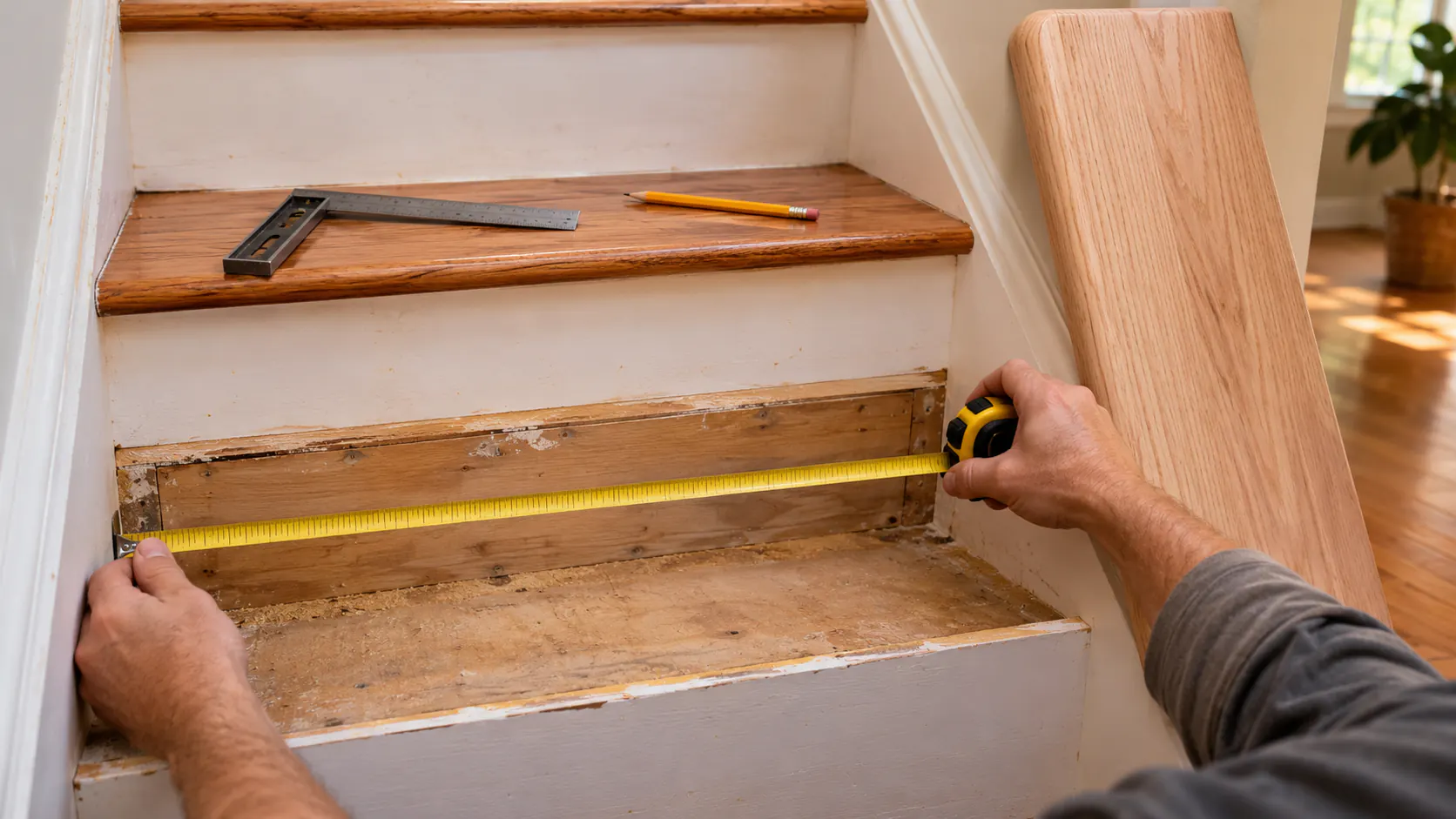
Measuring each step individually
Walls are rarely perfectly straight and steps are rarely identical. Each tread and riser is measured on its own and cut to fit, often with scribing along the wall side. Open-sided stairs need return nosings that wrap the exposed end of each tread, which adds careful joinery.
Installing treads and risers
New treads are set with construction adhesive and concealed fastening so they stay quiet and tight. Risers are installed or prepared for paint. When railings are being replaced, baluster holes and newel posts are laid out at this stage so everything aligns.
Finishing
Unfinished treads are stained and coated on site to match the floor, with drying time between coats. Prefinished treads skip most of that time but must match a prefinished floor closely. Either way, the stairs may be off limits for part of the process, so households with only one staircase should plan how upstairs bedrooms will be reached. Our hardwood installation timeline guide explains how finishing and curing affect the schedule.
How long it usually takes
Timing depends on the number of steps, the shape of the staircase, whether treads are prefinished and how many coats of finish are applied. A straight staircase with prefinished treads moves faster than an open staircase with site-finished treads and new railings. Ask for a schedule that separates removal, carpentry, finishing and cure periods so you know exactly when the stairs can be used again.
Dust, odor and indoor conditions
Stair work involves cutting and sanding in the middle of the house. Dust control, ventilation and keeping the air conditioning running at normal settings help both comfort and wood stability during humid Atlanta summers.
What affects the cost of converting stairs to hardwood
Stairs are priced by the work involved, not by square footage, because a small staircase contains a lot of cutting, fitting and finishing. In stair estimates, these are the factors that move the number most.
Shape and number of steps
A straight closed staircase is the simplest. Open sides, landings, winders, curved steps and bullnose starter steps each add custom pieces and labor. The number of steps matters, but the shape often matters more.
Treads, risers and materials
Species, grade, tread thickness, prefinished versus site-finished, and whether risers are painted or wood all change material and labor. Matching a specific floor stain may require sample boards and extra finishing steps.
Railings
Keeping the existing railing is the least involved option. Replacing spindles with iron balusters, adding new newel posts or replacing the handrail adds material and installation time, but it is far simpler to do now than after the new treads are finished.
Repairs and surprises
Loose stringers, damaged treads, out-of-level landings or old pet damage add work that cannot always be seen until the carpet is gone. A good estimate names these possibilities and explains how they will be handled. For a broader look at pricing factors, see our flooring installation cost guide, and if you want to spread the cost over time, review our flooring financing options.
A planning checklist for hardwood stairs
Use these questions to turn an idea into a clear scope before the estimate visit, or to compare proposals side by side.
- What is under the carpet on the top and bottom steps?
- Will the treads be replaced, overlaid with retrofit treads or refinished?
- Which wood species and stain will match the floors above and below?
- Will risers, skirt boards and stringers be painted or wood?
- How will the top step meet the upstairs floor, and is a flush nosing included?
- Are the balusters, newel posts or handrail being replaced?
- Does the staircase have open sides, landings or winders that need special pieces?
- How will the household reach upstairs rooms while finish cures?
- Who handles squeaks, loose treads or damage found after removal?
- Is a runner planned now or later, and how will it be attached?
If the carpet on the rest of the house is also near the end of its life, our guide on when to replace carpet helps decide which rooms to update at the same time. You can also browse finished staircases and floors in our project gallery and learn more about our hardwood installation service in Atlanta.
Design your new staircase before the visit
Pick a staircase, balusters and newel post in our stair designer, then send the design to us for a free in-home estimate.
Get My Free Stair Estimate →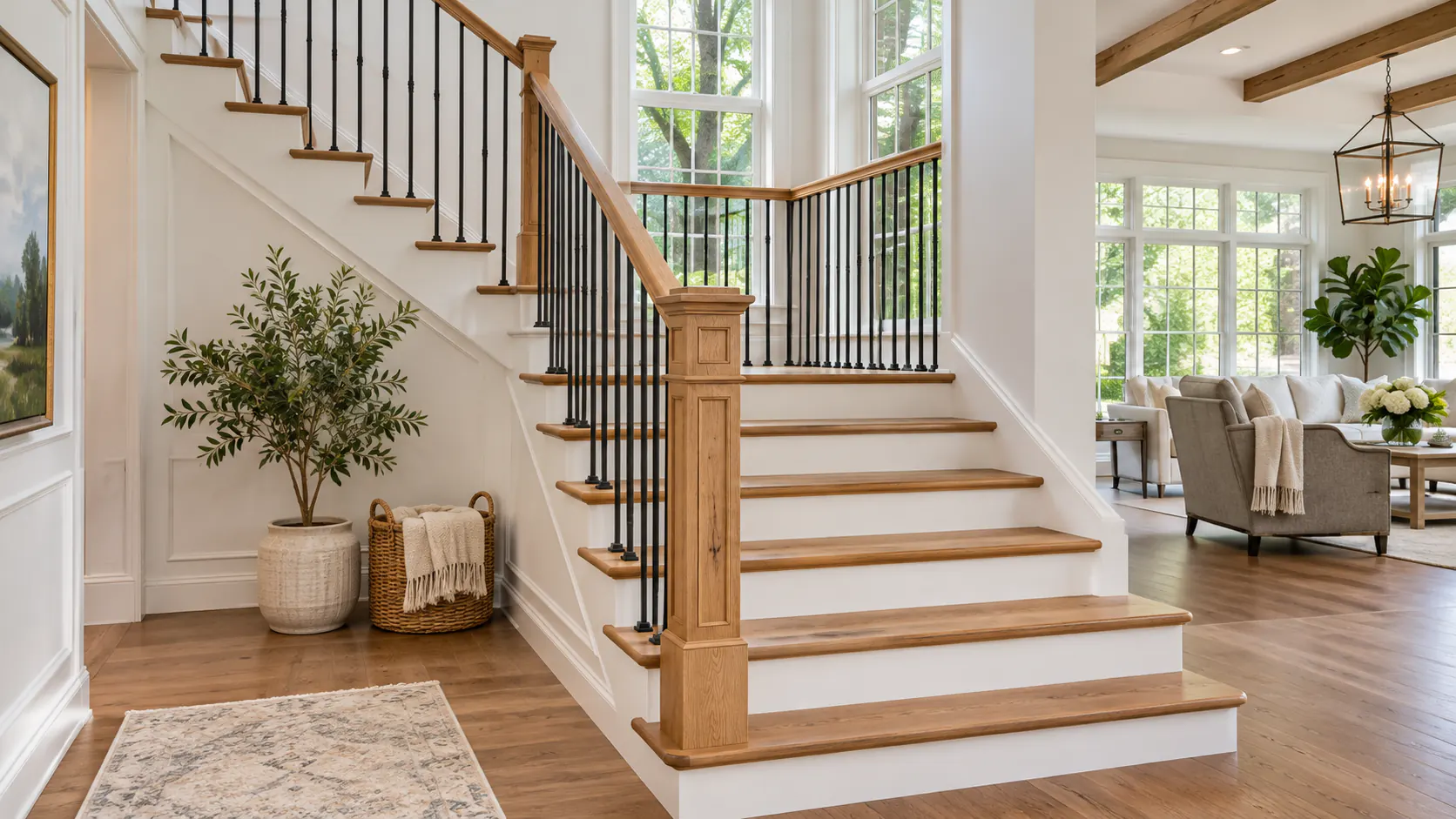
Frequently asked questions
Can I just pull up the carpet and refinish my stairs?
Only if real hardwood treads are underneath and in good condition. Most carpeted stairs have builder-grade treads that are not meant to be seen, so they need new hardwood treads or retrofit treads.
Do hardwood stairs have to match my hardwood floors?
They do not have to be identical, but they should coordinate. Most homeowners match the species and stain, and use a flush landing nosing so the top step blends into the upstairs floor.
Are retrofit treads as good as replacing the treads?
Quality retrofit treads can look excellent when the existing steps are solid and flat. Full replacement gives more control over squeaks, nosing profiles and step heights.
Should I replace my spindles with iron balusters at the same time?
It is the best time to do it. Baluster holes are laid out with the new treads, which avoids patching finished wood later.
Are hardwood stairs slippery?
A glossy finish can be. Matte or satin finishes, a light texture or a stair runner improve grip for socks, children and pets.
Can we use the stairs during the project?
Usually with limits. Stairs may be closed while treads are installed and while stain and finish dry, so plan access to upstairs rooms in advance.
How do I see design options before the estimate?
Use the Impeccable Floors stair designer to try different staircases, balusters and newel posts, then share the design when you request your free estimate.
Published and reviewed November 10, 2026. Railing and stair requirements depend on the code adopted where you live, and product instructions and site conditions control every installation.
Editorial references: The National Wood Flooring Association homeowner care guidance explains how to protect and maintain wood floors and stairs, and the EPA Renovation, Repair and Painting program describes lead-safe work practices for homes built before 1978. These resources provide context; product instructions and site conditions control the final work.