
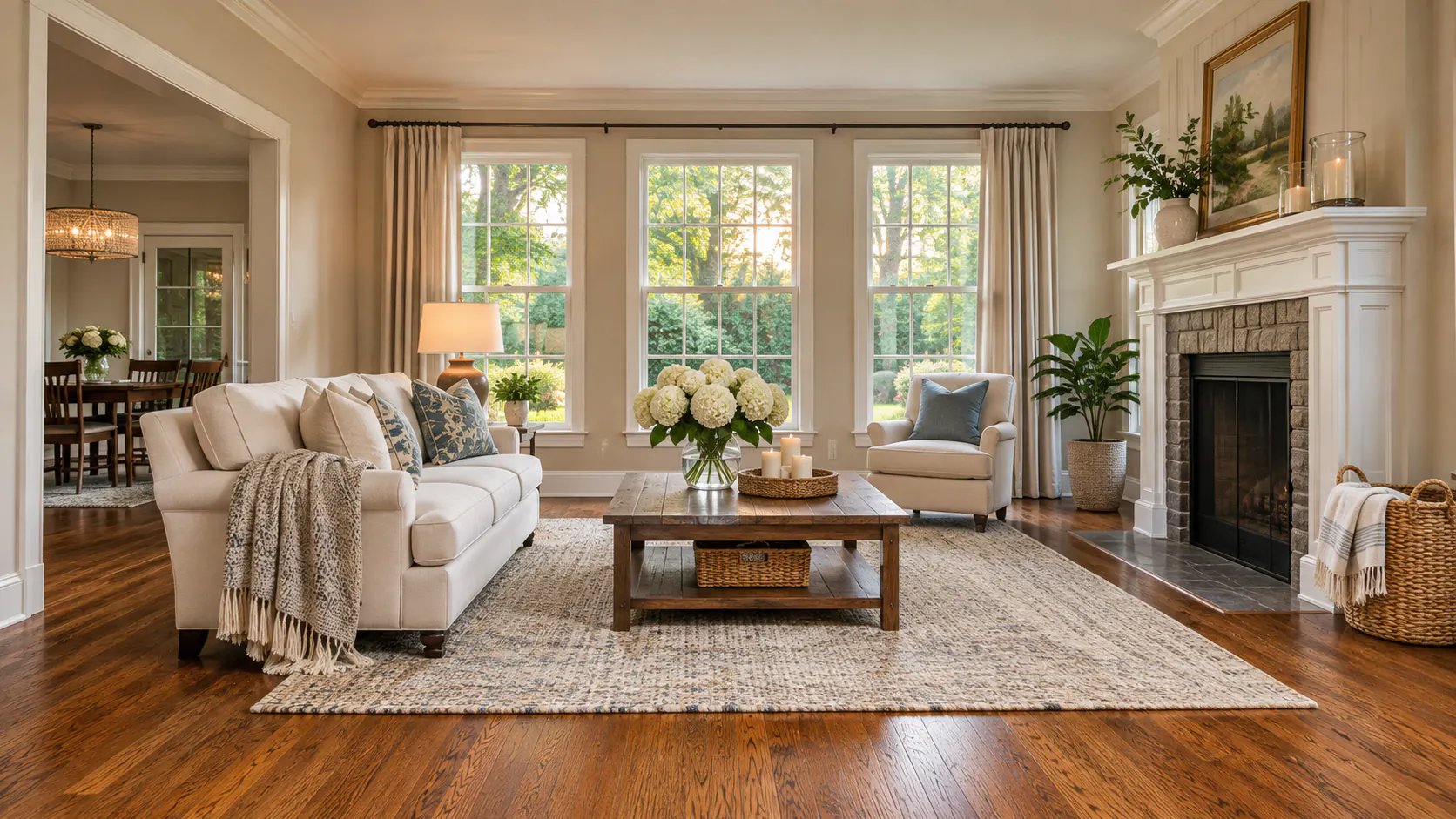
A stain color changes how every room on the floor feels, and it is one of the easiest flooring decisions to get wrong from a photo. The same can of stain looks different on red oak and white oak, in afternoon sun and lamplight, and under different finishes.
This guide to hardwood floor stain colors for Atlanta homes covers species, undertones, light, maintenance, finish and sampling, so the color you approve on the floor is the color you get.
Hardwood Floor Stain Colors Atlanta: The Short Answer
For most Atlanta homes, the safest stain colors are natural and medium tones on oak, chosen after testing samples on the actual sanded floor. Mid-tones hide pollen, red clay dust, pet hair and light scratches better than very dark or very light floors. Species, sunlight and the finish on top decide the final look.
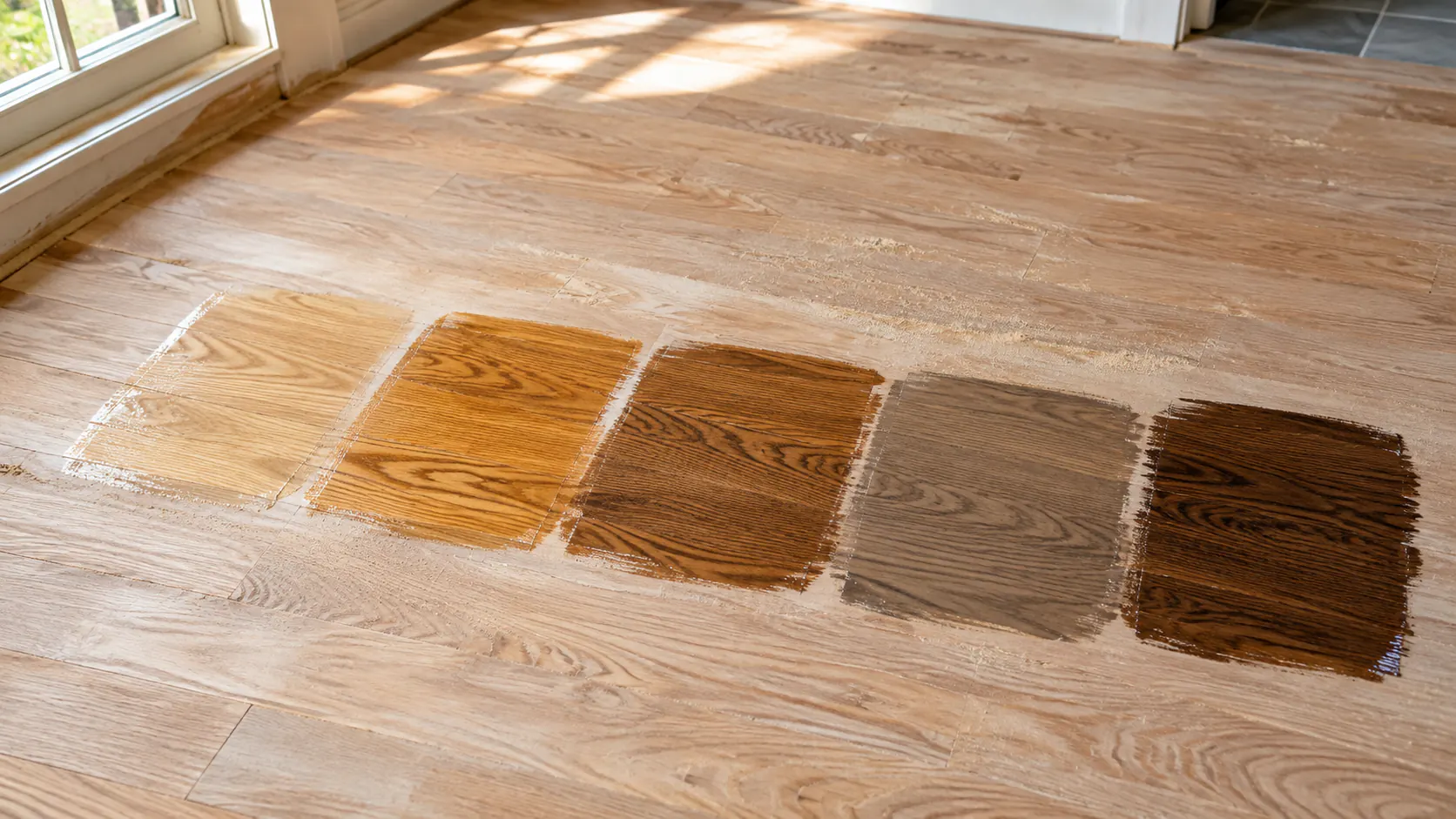
A stain is a translucent tint that soaks into the wood, not a paint color from a fan deck. One can of stain looks different on red oak than on white oak, in a sunny breakfast room than in a north-facing den, and under oil-based polyurethane than under a water-based finish.
Most conversations we have with Atlanta homeowners about hardwood floor stain colors begin with an inspiration photo. That is useful for direction, but the decision should come from what only your house can show: how your boards absorb color, how your light hits them and how the tone sits beside your cabinets, trim and furniture.
This guide covers both situations where stain is chosen on site: refinishing an existing hardwood floor down to bare wood, and site-finishing new unfinished hardwood. Prefinished floors get their color at the factory. If you are unsure whether your floor needs a full sand at all, read our guide on when to refinish hardwood floors first.
How wood species changes the same stain
Species sets the base color, the grain and how much stain the surface accepts, which is why there is no single best stain color for oak floors, let alone for every wood.
Red oak: open grain and a pink undertone
Red oak sits under the carpet in a great many older Atlanta homes, from intown bungalows to mid-century ranches, and it remains common in new construction. Its open grain takes stain readily and evenly. The catch is a pink to salmon undertone that bleeds through light and gray stains. A gray that looks cool on a sample card can read mauve or muddy on red oak, while browns and warm neutrals work with that undertone instead of fighting it.
White oak: a neutral base for natural looks
White oak leans olive, tan and khaki rather than pink. Its partly plugged pores often take a little less stain, giving a softer color from the same can. That neutral base makes it the go-to species for natural and greige floors. It is also rich in tannins, which can react with some products, one more reason to test the full stain-and-finish system.
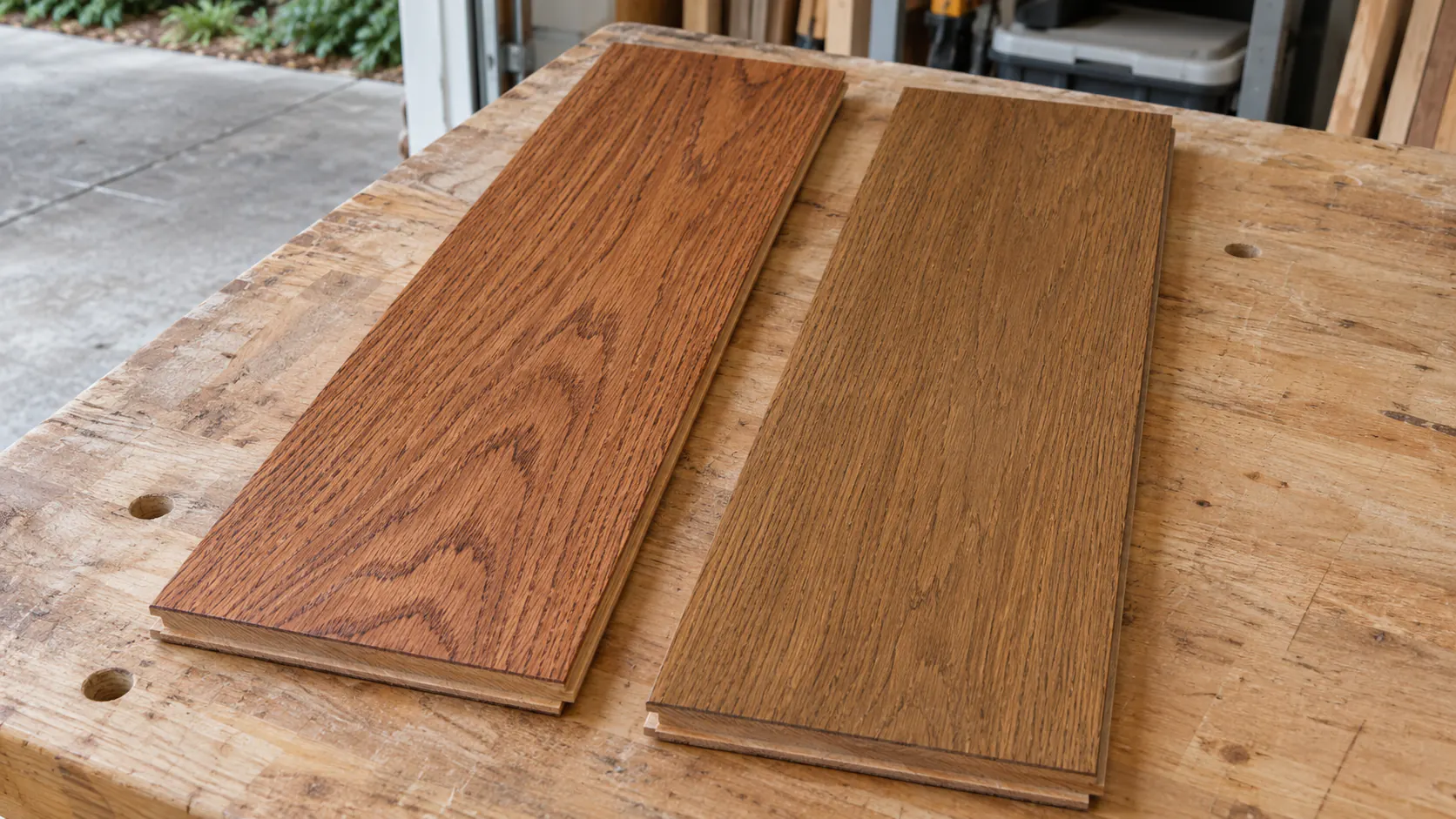
The white oak vs red oak stain difference is easiest to see side by side: one medium brown reads warmer and slightly redder on red oak and cooler, almost khaki, on white oak.
Maple and birch: smooth grain that can blotch
Maple and birch have dense, closed grain, so penetrating stains often soak in unevenly and leave darker patches beside lighter ones. Many maple floors are left natural for that reason. If you want color on maple, ask about a conditioner or a dye-based approach, keep the tone moderate and insist on large samples.
Hickory and heart pine: built-in variation
Hickory mixes creamy sapwood and brown heartwood in the same board. Stain narrows that contrast but never erases it, and a medium tone calms a busy hickory floor better than a very light one. Heart pine, found in some older intown houses, is soft and ambers on its own, so it usually looks best with a clear finish or a light, warm stain.
Undertones: cabinets, trim, brick and paint
Start with what you are not changing
List everything that stays before choosing the floor: cabinets, countertops, a brick or stone fireplace, built-ins and stair rails. Paint is the easiest thing in the room to change, so let it follow the floor rather than lead it.
Warm, cool and neutral undertones
Every stain has an undertone beneath its depth; browns lean red, orange, yellow or gray. Hold a sample against plain white paper and the lean becomes obvious, then set it against a cabinet door. Warm floors beside warm wood cabinets can merge into one orange mass, while a slightly cooler or deeper floor separates them. White or gray cabinets often pair well with natural white oak or a soft neutral brown.
Brick, stone and stained trim
Many traditional Atlanta homes have red brick fireplaces, and newer suburban builds often have stacked stone. Red brick beside a reddish floor looks monotone, while a more neutral brown lets the brick stand out. Limestone and gray stone can go either way, so sample right next to them.
Painted white trim makes almost any floor look crisp. With stained trim, doors or a wood ceiling, the floor should be clearly lighter or clearly darker. Two wood tones that are almost the same look like a mistake; two that contrast on purpose look designed.
See stain samples on your own floors
During a free in-home estimate, we look at your wood species, light and fixed finishes and talk through the color families that suit them before any sanding begins.
Request a Free In-Home Estimate →How Atlanta sunlight and lighting change stain color
Of all the stain colors Atlanta homeowners test, the ones that disappoint later were usually judged in a single light.
South- and west-facing rooms
Direct sun washes out color. Big south or west windows make a stain look a shade lighter and warmer in the afternoon than it did on the sample, and long summer afternoons exaggerate the effect. North light is cooler and flatter, so the same stain looks darker and grayer there. Most homes have both, so aim for a color you like in both places, not one that only works in the brightest spot.
Ambering, fading and rug shadows
Oak and many finishes deepen toward amber over the first years, while some dark stains slowly lighten in strong sun. Rugs block that change, so lifting one after a year or two can reveal a lighter or darker rectangle. Rotating rugs, closing shades during the harshest hours and adding UV-filtering window film in very sunny rooms all help. The finish manufacturer's cure instructions say when rugs can go down. Expect the floor to look a little warmer next year than on the day the crew packs up.
Evening lamps and bulb color
Many families see their floors most at night. Warm-white bulbs push floors toward orange, and cool-white bulbs make browns look grayer and flatter. Look at your samples after dark with the lighting you normally use.
What hides dust, pollen, pet hair and scratches
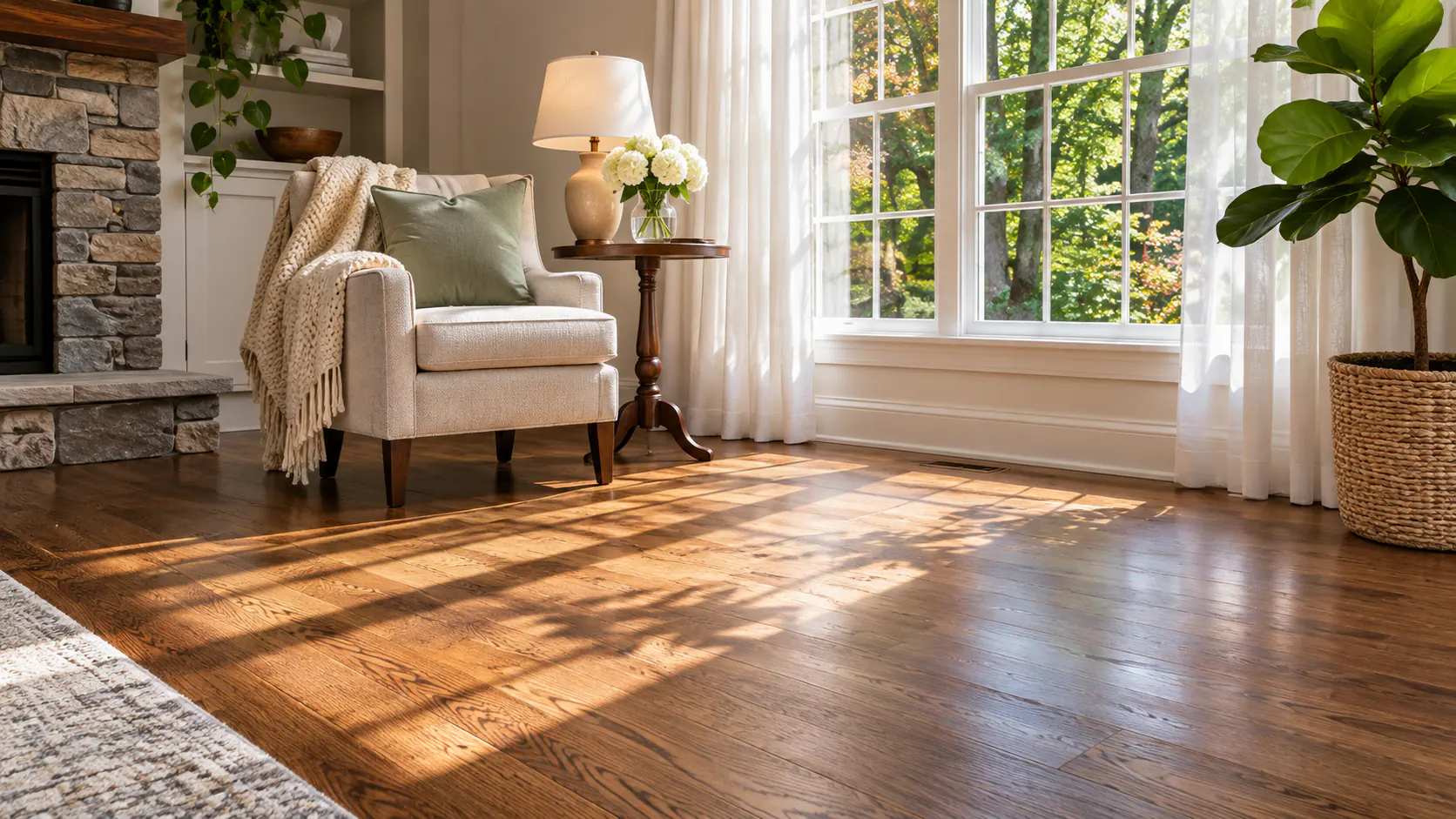
The stain colors Atlanta families live with most comfortably sit in the middle of the range. Very dark and very light floors look striking in photos, but they show what daily life tracks in.
Natural vs dark hardwood stain in daily life
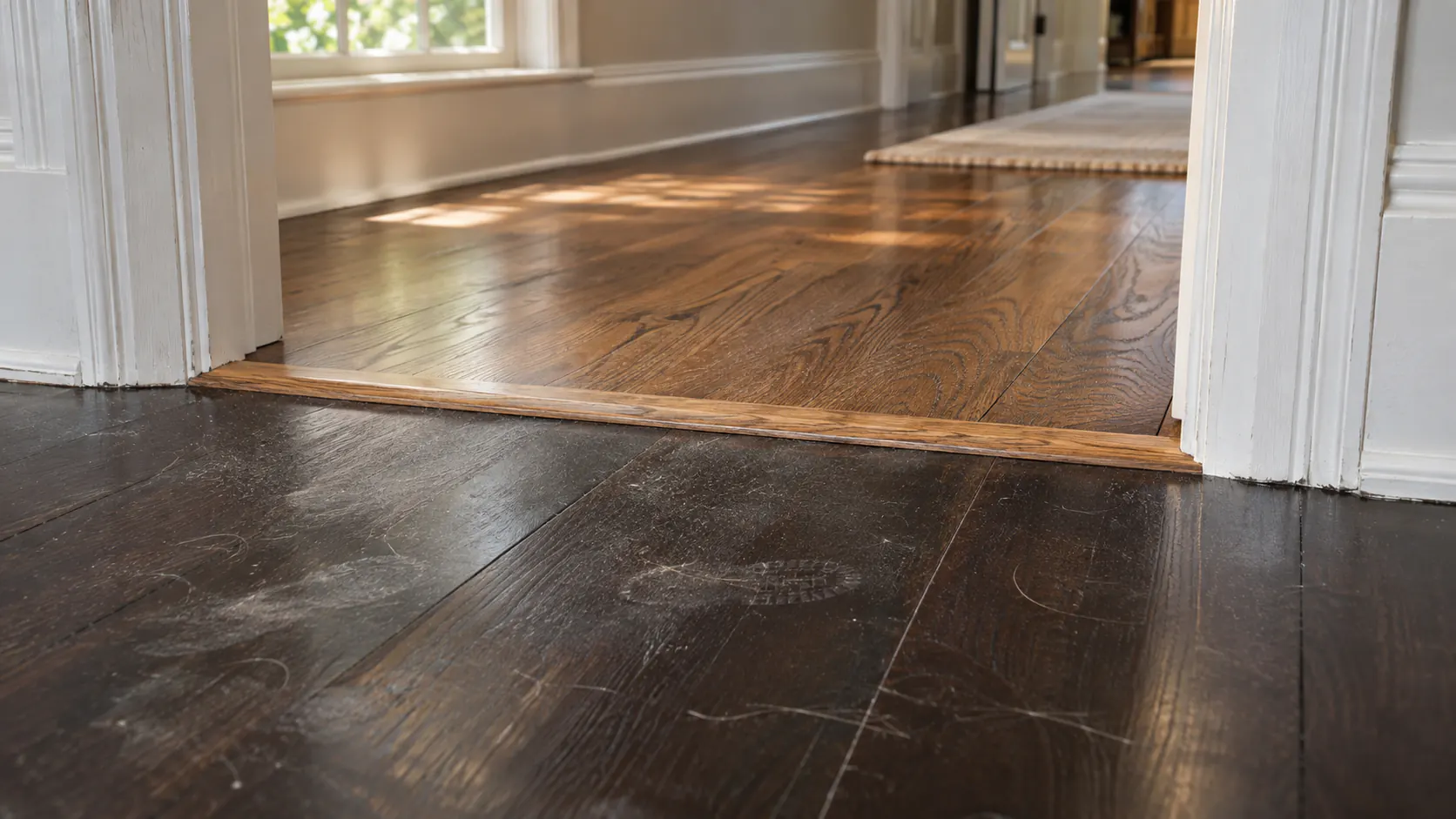
A dark floor is a contrast machine. Pale dust, water spots, light dog hair, the yellow film of spring pine pollen and orange red clay dust all stand out, and scratches expose lighter wood beneath. A natural or very light floor hides pale dust but shows dark hair, mud and coffee spills. Mid-tone browns with visible grain hide both kinds of mess, which is why they suit homes with kids, dogs and a busy back door.
| Color family and look | Tends to hide | Tends to show |
|---|---|---|
| Natural or clear: light, honest wood | Pale dust, pollen, light pet hair, fine scratches | Dark hair, mud, red clay, dark spills |
| Light neutral or whitewash: airy, modern | Pale dust and light scratches | Tracked dirt, dark hair, traffic paths |
| Golden or honey brown: warm, traditional | Pollen, red clay dust, most pet hair | Can look orange beside warm cabinets |
| Medium brown: balanced, classic | Dust, most hair colors, light scratches | Little day to day; deep gouges |
| Gray or greige: cool, contemporary | Light dust, gray pet hair | Pink cast on red oak; can date quickly |
| Dark walnut or espresso: formal, dramatic | Dark hair and dark dirt | Dust, pollen, footprints, scratches, water spots |
Grain, texture and sheen help too
Oak hides more than smooth maple at the same depth of color, and a lightly wire-brushed surface hides more than a perfectly smooth one. If you love a deep color, pair it with open-grain oak and a low sheen.
Finish type and sheen change the final color
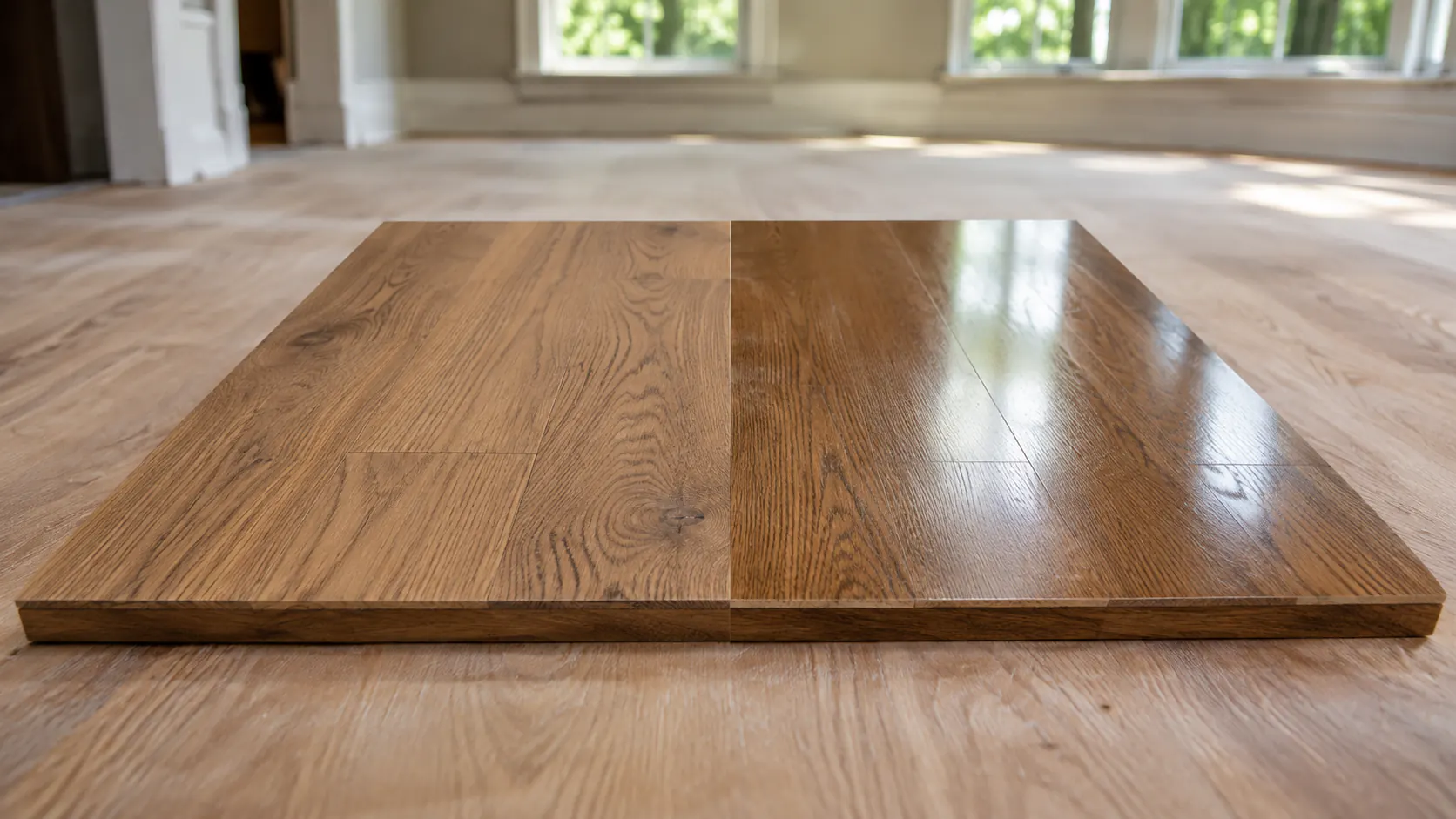
Stain is only half the color. The clear coats on top change its depth, warmth and reflection, so choose the stain and the finish together.
Oil-based finishes amber
Oil-modified polyurethane adds a golden cast the day it goes on and keeps ambering with age. That warmth flatters browns and natural red oak, but it can push whitewash, gray and greige toward yellow or a greenish tan. Oil-based products also carry a strong odor while they dry and cure, so plan to be out of the house and follow the product's ventilation instructions.
Water-based finishes stay clearer
Most water-based finishes go on nearly clear and change less over time, which keeps light and gray stains true to the sample. On natural white oak, that can look almost like raw wood, exactly the goal in many modern rooms; on unstained red oak, it can look pale and a little pink. Some products come in warmer formulas. Lower odor does not mean no fumes, so ventilation still matters.
Natural means no stain, not no color
A natural floor is sanded wood under a clear finish, with no stain. It is also the easiest color to repeat when a board is repaired later. Clear finish still deepens and warms bare wood, so never judge natural from freshly sanded boards. Penetrating oils and hardwax oils are another clear option, with a slightly darker, low-luster look and a different maintenance routine.
Matte, satin and gloss
Gloss reflects more light, making a stain look deeper and richer while highlighting scratches, footprints and dust. Matte diffuses light, so the floor looks slightly lighter, closer to bare wood and far more forgiving. Satin sits between them. Ask for at least one coat of the actual finish, in your chosen sheen, over the samples.
How to test stain samples on your actual floor
Samples belong on your floor after sanding, not on a showroom board, because your boards have their own age, density and history. To narrow the field first, our online floor visualizer shows wood tones in a photo of your own room, so sample day becomes a choice among a few finalists.
Where to put samples
Ask for three to five colors, each in a patch large enough to judge, in several places: near the brightest window, in the dimmest corner and in the room's main sight line. Sample over any replacement boards too, and keep a clear-finish patch to show the wood's natural color.
Look in daylight and after dark
Check the samples in the morning, in midafternoon and at night with your usual lamps on. Stand up; you will see this floor from standing height for years. Bring a cabinet door or a throw pillow down to the samples. If two colors are close, drop the one you like less on a cloudy day.
Sanding grit and water-popping change depth
How the floor is sanded is part of the color. A coarser final abrasive leaves deeper scratches that soak up more stain and look darker, while a finer final pass gives a lighter, more even result. The edged perimeter can absorb a little differently from the open field, which is why careful blending matters with dark colors.
Water-popping means lightly wetting the sanded floor to raise the grain before staining. It helps dark stains look rich and even on oak, but it also darkens every color compared with a non-popped sample. Test on wood prepared exactly the way the whole floor will be.
Before you approve a color, confirm that:
- Samples went on after final sanding, with the same grit sequence the full floor will get.
- Popped and non-popped patches were compared if a dark color is on the list.
- Each finalist has a patch topped with the actual finish and sheen.
- You have seen every sample in direct sun, in shade and under evening lighting.
- Your top choice was checked beside cabinets, trim, stone and stair parts.
- Everyone in the household has seen it before the whole floor is stained.
Not sure which stain samples to try?
Tell us about your rooms, pets and light. We will suggest a short list of colors and finishes to test on your sanded floor before the full stain goes down.
Schedule My Free Estimate →Matching existing floors, stairs and adjoining rooms
Floors that run from room to room
Stain looks best when every connected room is sanded and stained in the same pass. Refinishing the living room while the dining room keeps an old, ambered finish leaves a visible line at the doorway, because one side has years of patina and the other is fresh wood. If budget forces phases, stop at natural breaks such as thresholds or a change in board direction.
New boards and new floors
When carpeted rooms open up to hardwood or damaged boards are replaced, new wood is woven in and the whole area is sanded together. Fresh boards can take stain a little differently than decades-old wood, so sample over both and lean toward medium tones, which disguise small differences best.
For new floors, site-finished solid hardwood and unfinished engineered products accept a custom stain, while prefinished planks come in a fixed color. Our hardwood installation team can match species and board width before sanding begins. An engineered floor's wear layer limits future color changes, as our comparison of engineered vs solid hardwood explains.
Stair treads, nosings and risers
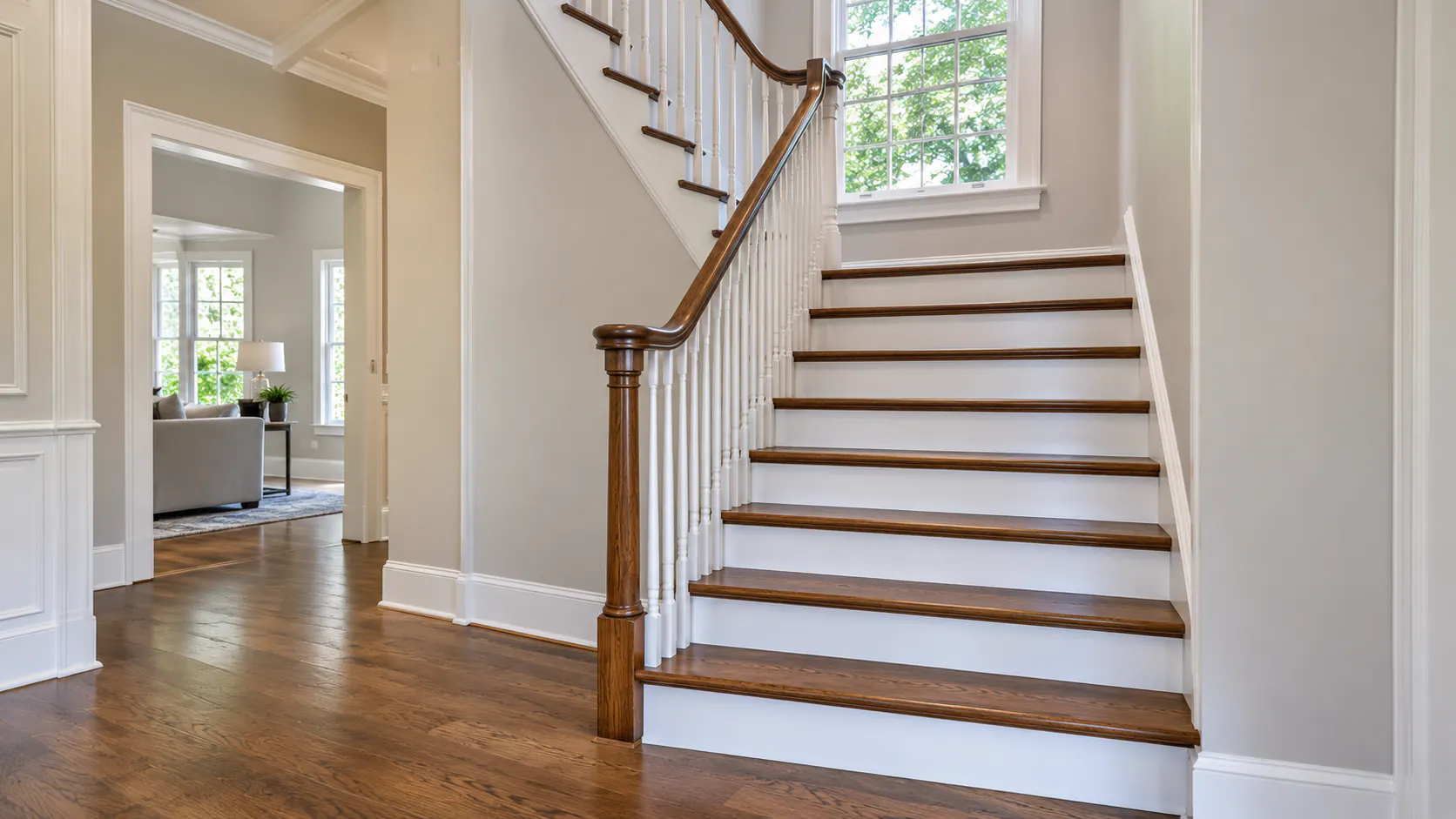
Stairs are where color matching most often goes wrong. Treads may be a different species or grade than the floor, rounded nosings expose end grain that drinks up stain, and a staircase is seen in different light than the floor around it. Sample on a tread or spare tread stock.
White risers with stained treads remain a classic pairing that makes small differences less noticeable. If carpeted stairs are part of the project, our guide to converting carpet to hardwood stairs explains how new treads are chosen and finished to match.
Trends, timeless tones and resale
Popular hardwood stain colors right now
Popular hardwood stain colors move in cycles. Gray and greige filled new builds for years, and many designers have since returned to warm naturals, honey browns and rich mid-tones, often on matte white oak. Very dark espresso shows up less often in new projects. Trends are good for ideas, but you will recolor a floor far less often than you repaint a wall.
Timeless choices for resale
The floor colors Atlanta buyers respond to most consistently are the ones that do not make them picture a refinish: natural oak, warm medium brown and soft neutral browns. If you expect to sell within a few years, those tones are the safe lane. Our guide to flooring with the best resale value in Atlanta covers the bigger picture.
When a bold color makes sense
If you plan to stay a long time, choose what you love. A dark floor in a formal dining room or a pale natural floor in a bright modern house can be exactly right, as long as you accept the maintenance trade-offs. Solid hardwood can usually be sanded and recolored later, within the limits of its remaining wood. Browse finished tones in our project gallery.
A stain color decision checklist
Stain color regret usually traces back to a choice made from a photo or a store chip. These steps keep the final decision on the floor itself:
- Identify the species of every floor area, including stairs and replacement boards.
- List what stays: cabinets, counters, brick or stone, trim and furniture.
- Decide how the floor must handle pets, kids, sun and pollen season.
- Choose a color family together with a finish type and sheen.
- Narrow to three to five candidates with photos and a room visualizer.
- Have samples applied after final sanding, popped or not to match the plan.
- Topcoat part of each sample with the planned finish and sheen.
- View the samples in morning, afternoon and evening light, standing up.
- Check stair treads and transitions to adjoining rooms.
- Approve one color in writing, with stain, finish and sheen recorded for future touch-ups.
Color is also tied to scope. A real color change requires sanding to bare wood; a screen and recoat refreshes the finish but keeps the existing stain. Our hardwood refinishing cost guide explains how sanding, staining, stairs and finish choice shape the project total.
Choose your stain on your floor, not on a screen
Schedule a free in-home estimate and we will look at your species, light and finishes, then plan stain samples as part of your refinishing or installation project.
Get My Free Estimate →Frequently asked questions
What is the best stain color for oak floors?
There is no single best color, but natural and medium brown tones suit the widest range of homes and hide everyday dust and pet hair well. Red oak usually looks best in warm browns, while white oak handles natural and neutral tones more gracefully.
Does red oak or white oak take stain better?
Red oak's open grain absorbs stain readily and evenly, but its pink undertone shows through light and gray colors. White oak absorbs a little less and stays more neutral, so it is preferred for natural and cool-toned looks.
Can I change my hardwood floor color without sanding?
Not reliably. Stain has to soak into bare wood, so a true color change means sanding through the old finish. A screen and recoat renews the clear coat but keeps the color you already have.
Do dark hardwood floors show more dust?
Yes. Very dark floors make pale dust, pollen, footprints and light pet hair stand out, and scratches expose lighter wood underneath. A medium tone with a matte or satin sheen is far more forgiving.
Will a stained floor change color over time?
Usually a little. Oak and oil-based finishes tend to warm toward amber with light exposure, and some dark stains lighten in strong sun. Rotating rugs and using shades in sunny rooms helps the color age evenly.
Should stair treads be the same color as the floor?
Treads usually look best matched or very close to the floor, but they often absorb stain differently, so sample on a tread first. White risers with stained treads keep a staircase looking intentional.
How long should I look at stain samples before deciding?
Long enough to see them in morning, afternoon and evening light, which often means living with them for at least a day. Your refinisher will plan around the dry times in the product instructions.
Published and reviewed November 10, 2026. Stain and finish manufacturers' instructions, along with the species and condition of your floor, control the final color and process.
Editorial references: The National Wood Flooring Association offers industry background on wood flooring species and finishing, its homeowner care guidance covers protecting a finished floor from grit, sun and everyday wear, and the EPA overview of volatile organic compounds explains why ventilation matters while floor finishes are applied and dry. These resources provide context; product instructions and site conditions control the final work.