
Best Flooring Atlanta Climate Guide: What Works in Local Homes?
A practical, room-by-room guide to flooring that can handle Georgia humidity, hot summers, sudden storms, red clay, pollen and real family life.
The best floor for an Atlanta home is not simply the material with the highest price or the toughest marketing claim. It is the floor that fits your room, subfloor, household and tolerance for maintenance while remaining stable through North Georgia's long humid season.
The best flooring Atlanta climate decision starts with the room, substrate, moisture exposure and daily traffic—not with one universal product. Use this best flooring Atlanta climate guide to compare complete flooring systems for the conditions inside your home.
Best Flooring Atlanta Climate: The Practical Answer
Luxury vinyl plank (LVP) is the best all-around flooring for many Atlanta homes because it tolerates humidity, resists everyday spills and is easy to clean. Engineered hardwood is the best premium choice for homeowners who want genuine wood, dimensional stability and strong resale appeal. Porcelain tile is excellent for bathrooms, laundry rooms and moisture-prone entries, while carpet remains a comfortable option for dry bedrooms and upstairs spaces.
That answer is useful, but it is not universal. A Midtown condo on a climate-controlled upper floor does not face the same conditions as a Marietta home with a concrete basement slab. A busy family in Alpharetta with two dogs needs a different surface than an empty nester restoring an older Decatur bungalow. Even within one house, the ideal flooring can change from room to room.
Atlanta homeowners usually make the best decision by balancing five things: moisture exposure, dimensional stability, scratch and dent resistance, comfort, and long-term repairability. This guide explains those tradeoffs honestly. If you already know which material interests you, explore our dedicated pages for hardwood floor installation, luxury vinyl plank flooring, tile installation, laminate flooring and carpet installation.
Why Atlanta's climate matters to your floor
Atlanta has a humid subtropical climate. In plain English, that means hot, humid summers; relatively mild winters; frequent rain; and indoor environments that can change considerably as heating and air conditioning cycle. Flooring sits at the intersection of those conditions. It reacts not only to a dramatic leak, but also to the moisture carried invisibly in the air and within the subfloor.
Wood is hygroscopic: it gains and loses moisture as surrounding conditions change. When it absorbs moisture, it expands. When it dries, it contracts. Normal movement is expected, which is why a professional installation includes appropriate expansion space and follows product-specific fastening or floating requirements. Trouble begins when moisture changes are extreme, installation conditions are ignored or water is trapped beneath the floor.
Best Flooring Atlanta Climate Choices by Substrate
During an Atlanta summer, outdoor air can hold a great deal of moisture. A well-performing HVAC system keeps the indoor environment more stable, but open doors, poorly sealed crawl spaces, oversized air conditioners that cool too quickly to dehumidify, and vacations with the thermostat set unusually high can all shift indoor conditions. Solid hardwood may show seasonal gaps in a dry period or edge lift when excess moisture enters from below. Engineered wood generally moves less because its layered construction creates greater dimensional stability.
Resilient materials such as LVP do not absorb atmospheric moisture like natural wood, but that does not make subfloor moisture irrelevant. Water vapor moving through concrete can affect adhesives or become trapped under an impermeable surface. Every floor system is only as dependable as the substrate below it.
Rain, red clay and pollen
Atlanta storms can turn an entryway into a collection point for wet shoes, umbrellas and pet paws. Georgia red clay is abrasive when tracked inside, and spring pollen finds every open door. These local realities favor floors with durable wear layers, tight joints and a cleaning routine that removes grit before it acts like sandpaper. Walk-off mats help, but mats should have floor-safe backings that will not trap moisture or discolor a finish.
Crawl spaces, slabs and basements
Many homes across metro Atlanta are built over crawl spaces, concrete slabs or a combination of foundation types. A damp crawl space can send moisture toward the subfloor. A below-grade basement can experience vapor transmission through concrete even when no puddle is visible. Before material is ordered, the installer should identify the substrate, assess flatness, look for signs of water intrusion and conduct the moisture tests required by the flooring manufacturer.

Atlanta flooring comparison at a glance
No rating can capture every product. A premium laminate can outperform a bargain LVP, and a well-finished hardwood can serve a family for generations. Still, this table is a helpful starting point for common residential products installed correctly.
| Material | Humidity tolerance | Water exposure | Repairability | Best Atlanta uses |
|---|---|---|---|---|
| Engineered hardwood | Very good with climate control | Wipe spills promptly | Good; varies by wear layer | Living rooms, dining rooms, bedrooms |
| Solid hardwood | Good with careful acclimation | Not for recurring water | Excellent; can be refinished | Above-grade living areas |
| Luxury vinyl plank | Excellent | Excellent product resistance | Individual planks may be difficult to access | Busy homes, kitchens, basements |
| Porcelain tile | Excellent | Excellent | Individual tile can be replaced | Bathrooms, laundry, entries |
| Water-resistant laminate | Very good when specified correctly | Limited by product warranty | Moderate | Living rooms, offices, bedrooms |
| Carpet | Good in dry conditioned rooms | Poor for repeated moisture | Spot repair possible | Bedrooms, stairs, upstairs bonus rooms |
Hardwood flooring: timeless, valuable and climate-sensitive
Hardwood remains one of Atlanta's most desired residential finishes. It brings warmth to traditional homes, gives renovated bungalows historical character and makes open contemporary spaces feel grounded. Unlike a photographic wood look, genuine hardwood has natural variation that becomes more attractive as the home develops its own patina.
Engineered versus solid hardwood in Atlanta
Engineered hardwood has a real wood surface over multiple structural layers. Those layers are arranged to limit movement, making a quality engineered product a strong fit for Atlanta's humidity and for installations over concrete where the manufacturer permits it. The thickness of the real-wood wear layer matters: some products allow future sanding or refinishing, while very thin veneers offer fewer restoration options.
Solid hardwood is one piece of wood from top to bottom. Its great advantage is longevity. Depending on the species, thickness and condition, it can be sanded and professionally refinished multiple times. That makes it less disposable than many alternatives. Its tradeoff is greater movement with moisture changes, so product acclimation, subfloor readings, nail-down details and indoor humidity control deserve careful attention.
Wood species, finish and daily life
Harder does not automatically mean indestructible. Oak is popular because its grain disguises minor wear, it accepts stain well and it offers a practical balance of hardness and workability. Very smooth, dark floors can show dust, pollen and scratches more readily than mid-tone matte finishes with visible grain. Wire-brushed or low-sheen surfaces often fit active Atlanta households because everyday marks blend into the texture.
Hardwood is not the best material for a bathroom with frequent standing water or a basement with unresolved moisture. It can work beautifully in kitchens when owners understand that spills need prompt attention and appliances should be monitored for leaks. Felt pads, a floor-safe vacuum head, entry mats and maintaining normal indoor conditions do more for longevity than aggressive chemical cleaners.
- Best for homeowners prioritizing authenticity and long-term value.
- Engineered construction is usually the more stable wood option over slabs.
- Solid wood offers the strongest future refinishing potential.
- Choose texture and sheen with pets, pollen and visible traffic in mind.

Not sure which floor fits your Atlanta home?
Schedule a free in-home estimate. We will look at your rooms, discuss moisture and traffic, and help you compare practical options without pressure.
Request My Free EstimateLuxury vinyl plank: the versatile all-around choice
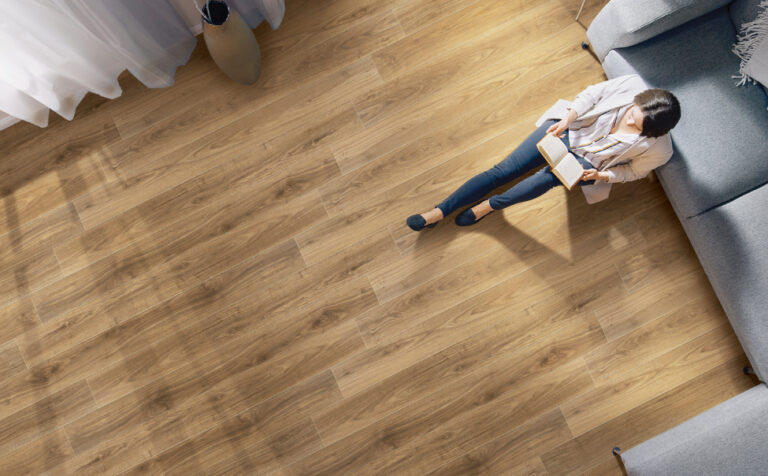
Luxury vinyl plank has become a default recommendation for many busy metro Atlanta households, and there are good reasons. A quality product can provide strong resistance to spills, stable performance across normal humidity changes, comfortable maintenance and a convincing wood appearance. It is useful in kitchens, mudrooms, playrooms, rental properties and many finished basements.
LVP is often described as waterproof. Usually, that means the plank material will not swell like fiberboard when exposed to topical water. The claim should not be stretched beyond the written warranty. Water can still travel through perimeter gaps, reach the subfloor, affect walls or support mold growth. Flooding also leaves contamination and moisture that must be addressed even when the planks look unchanged.
What separates good LVP from a disappointing floor?
Wear-layer specifications matter, but they are not the only measure of quality. The locking profile, overall thickness, core construction, dimensional stability, finish texture, bevel design and manufacturer support all influence performance. A thicker plank cannot compensate for a weak joint, and the heaviest wear layer cannot correct a rolling or uneven subfloor.
Direct sunlight through large Atlanta windows can create hot zones. Product temperature limits and instructions for sunrooms or floor-to-ceiling glass should be reviewed. Window coverings and HVAC stability can help. Furniture pads remain important because resilient does not mean scratch-proof, and rubber-backed mats may react with some vinyl finishes.
The biggest installation issue is flatness. Floating planks flex over low spots, which stresses locking joints and can produce movement or noise. Professional LVP installation starts with substrate assessment and preparation, not with opening the first carton. When chosen and installed well, LVP offers one of the most forgiving combinations of appearance, water resistance and day-to-day care available to Atlanta homeowners.
Porcelain and ceramic tile: strongest for wet rooms
Tile is the climate-proof workhorse of the group. Porcelain tile absorbs very little water, tolerates humidity and cleans easily after muddy shoes or pet traffic. It is an excellent choice for bathrooms, laundry rooms, entries and kitchens. A tile floor can last for decades when the assembly beneath it is designed and installed correctly.
The word “tile” does not describe the full system. Underlayment, waterproofing in wet areas, movement accommodation, mortar coverage, grout selection and substrate stiffness all affect the result. Tile is rigid; wood-framed subfloors that bend excessively can contribute to cracked grout or tile. On a concrete slab, existing cracks and moisture conditions need evaluation.
Tile's practical drawbacks are comfort and hardness. It feels cool underfoot in winter, dropped objects break more easily, and standing for long periods may be less comfortable. Area rugs or cushioned mats can help where appropriate. Textured finishes improve slip resistance in wet locations, while grout colors near the tile tone are easier to live with than high-contrast grout that emphasizes every line.
For a coordinated renovation, Impeccable Floors also handles kitchen and bathroom remodeling, allowing flooring, tilework and surrounding finishes to be planned as one system rather than as disconnected decisions.


Modern laminate: better than its old reputation
Homeowners sometimes remember laminate as a hollow-sounding, moisture-sensitive floor from decades ago. Modern high-quality laminate can be dramatically better. Its dense core and protective surface can deliver excellent scratch resistance, realistic registered textures and crisp visuals. For homes with large dogs or rolling office chairs, its surface durability may be especially appealing.
The key phrase is “water-resistant,” not an assumption of unlimited waterproofing. Each manufacturer defines permitted spill time, wet-mopping rules and room restrictions. Standard laminate with exposed fiberboard edges can swell if water reaches the core. Newer systems use improved edge treatments and locking profiles, but homeowners should still follow the exact care and warranty language.
Laminate performs best in conditioned, dry living spaces: family rooms, home offices, hallways and bedrooms. It can be suitable for kitchens when the selected product is approved and spills are managed promptly. It is generally a less comfortable bet in bathrooms or below-grade spaces with uncertain moisture. Underlayment selection affects sound, comfort and vapor management, while subfloor flatness protects the locking system just as it does with LVP.
Choose laminate when scratch resistance and a realistic wood aesthetic rank above maximum water tolerance. Browse our laminate flooring service to understand the installation process and available styles.
Carpet: comfortable where moisture risk is low
Carpet does not win a whole-house humidity contest, yet it remains valuable in the right Atlanta rooms. It softens bedrooms, reduces echo in open or multi-level homes, provides traction on stairs and feels comfortable under bare feet. Families may prefer it in nurseries and upstairs bonus rooms where sound control matters.
Fiber and construction determine performance. Solution-dyed synthetic fibers often provide practical stain resistance, while dense construction tends to hold its appearance better than a loose, tall pile in traffic lanes. Pad quality matters for comfort and support, but the thickest pad is not automatically correct; the carpet manufacturer specifies appropriate density and thickness.
Atlanta's pollen season makes regular filtration and vacuuming especially important. A quality vacuum removes particles before they work deeper into the pile. Carpet should not cover an actively damp slab or basement, and it is a poor choice around recurring leaks. If allergies are a primary concern, discuss cleaning habits, fiber selection and whether a hard surface better fits the household rather than relying on blanket claims.
Used selectively, professionally installed carpet can complement hard flooring elsewhere and deliver comfort without taking on unnecessary moisture exposure.
The best flooring for each room in an Atlanta home
Living room and dining room
Engineered or solid hardwood is the premium choice for visual continuity, warmth and long-term value. LVP is the easier-care alternative for homes with pets, pool traffic or frequent spills. Laminate works well when scratch resistance and budget are the priorities. In open plans, using one surface across living, dining and connecting halls makes the space feel larger and reduces awkward transitions.
Kitchen
Quality LVP, porcelain tile and properly maintained hardwood are all reasonable kitchen choices. LVP is comfortable and forgiving; tile excels against topical water; hardwood creates seamless flow from adjacent rooms but needs prompt spill cleanup. Consider appliance leak pans or water sensors regardless of flooring type, because a slow refrigerator or dishwasher leak can damage cabinets and subfloors before it becomes visible.
Bathroom and laundry room
Porcelain tile is the classic recommendation, especially when paired with a correctly built waterproof assembly in showers and other wet areas. Approved LVP can offer a warmer, softer surface in powder rooms or laundry rooms. Avoid treating a moisture-sensitive material as waterproof simply because joints appear tight.
Basement
LVP and porcelain tile are usually the safest starting points over an Atlanta basement slab. Before installation, confirm that exterior drainage, foundation conditions and indoor humidity are controlled. Test the concrete as the flooring system requires. Carpet tiles may be considered in a proven dry space because localized sections can sometimes be replaced, but wall-to-wall carpet is risky where dampness has occurred.
Bedroom and upstairs spaces
Carpet provides warmth and sound absorption. Hardwood gives the home a consistent premium finish and is easier to clean. Laminate and LVP offer durability at different price and performance points. Upstairs floors also transmit impact sound, so the complete assembly and any homeowner-association sound requirements matter in condos and townhomes.
Entry, mudroom and pet zone
Porcelain tile and durable LVP handle the repeated combination of wet shoes, red clay and grit most easily. Choose a textured, slip-conscious surface and create enough mat area to catch debris before it reaches adjacent hardwood. Keep pet nails maintained and wipe standing water rather than assuming any surface is maintenance-free.
Get a flooring recommendation based on your actual rooms
Online comparisons cannot show subfloor conditions, natural light or how samples look beside your cabinets. Our free in-home estimate turns general advice into a clear project plan.
Schedule a Free In-Home EstimateInstallation details that matter more than the label
A climate-appropriate product can still fail when installed over the wrong conditions. Conversely, a carefully selected and installed floor can perform far beyond a homeowner's initial expectations. The following steps are not decorative extras; they are part of the flooring system.
1. Moisture testing
Testing should match the substrate and manufacturer's requirements. Wood subfloors are commonly assessed with a calibrated moisture meter, looking at both the subfloor and the flooring material. Concrete requires an approved test method rather than a quick visual judgment. Results guide whether installation can proceed, a mitigation system is needed or a moisture source must be corrected.
2. Acclimation based on conditions, not folklore
“Leave it in the house for three days” is not a universal rule. Some products require acclimation; others have specific conditions or no traditional acclimation period. Hardwood readiness depends on moisture relationships, species, board width, jobsite conditions and manufacturer instructions. The home should be enclosed and operating at normal living conditions, not functioning like a construction site with open windows.
3. Subfloor flatness and integrity
Flat is not the same as level. Most floor coverings can tolerate a sloped but flat surface better than waves, humps and abrupt dips. Those irregularities cause floating joints to flex, tile to receive uneven support and hardwood to bridge or squeak. Preparation may involve securing loose panels, grinding high spots, filling approved low areas or repairing damaged substrate.
4. Expansion space and transitions
Floating floors and wood products need room to move. Perimeter gaps are concealed by baseboard or molding; they should not be eliminated because the finished edge looks tighter. Large areas, doorways and changes between rooms may require transitions according to the installation instructions. Heavy fixed cabinetry should not pin down a floating floor unless the system explicitly allows it.
5. The right installation method
Nail-down, glue-down and floating systems each have appropriate applications. A concrete slab may favor glue-down engineered hardwood or a floating product, while a plywood subfloor may support nail-down hardwood. Sound-control underlayments may be required in attached housing. The product, substrate, floor height and adjacent surfaces should determine the method—not convenience alone.
Cost, lifespan and resale value
Flooring cost is more than the price printed on a sample. The complete project can include demolition, disposal, furniture handling, subfloor repair, moisture mitigation, underlayment, transitions, baseboards, stair parts and installation. A lower-priced product can produce a higher total if it requires extensive preparation or early replacement.
Hardwood usually has the highest initial investment but offers genuine material, strong buyer appeal and the possibility of refinishing. Tile can also deliver an exceptionally long service life. LVP generally balances moderate cost with low maintenance and strong water resistance, though it is replaced rather than refinished. Laminate can provide excellent scratch performance and visual quality at an accessible price. Carpet often has the lowest initial cost but a shorter replacement cycle in active areas.
Think in cost per year, not just cost per square foot. A floor that lasts twenty years and still suits the home may be a better value than one replaced twice. Also consider whether repairs can be localized. Keeping one unopened carton from the original dye lot is sensible for plank and tile floors because matching a discontinued style years later can be difficult.
For Atlanta resale, broad-appeal colors and consistent flooring across connected spaces are generally safer than highly personalized patterns. Natural oak tones, warm neutrals and restrained textures complement many architectural styles. Still, the best return comes from a correctly installed floor that fits the home's market position—not automatically from choosing the most expensive material.
How to choose your floor with confidence
Start with the room's greatest risk. If it is water, prioritize a water-tolerant system. If it is dog claws and grit, focus on scratch resistance and a forgiving visual. If it is resale and architectural character, genuine hardwood may justify the investment. If it is sound upstairs, compare carpet and underlayment assemblies. Then narrow the products that solve that main problem.
Next, evaluate the home rather than the sample board. Note the foundation type, sunlight, existing floor height, transitions, stair details and whether the HVAC operates consistently. Bring the sample into morning and evening light. A gray plank that looks neutral in a showroom may appear blue beside warm cabinets; a dark glossy floor can reveal every piece of pale spring pollen.
Finally, compare written specifications and warranties. Ask what the warranty says about wet areas, indoor temperature, direct sun, rolling loads, pets and cleaning products. Confirm who will prepare the subfloor and what happens if unexpected conditions appear after demolition. A detailed scope protects the homeowner and the installer.
Choose engineered hardwood for premium main living areas, LVP for maximum versatility and easy care, porcelain tile for truly wet rooms, laminate for scratch-focused dry spaces, and carpet for quiet, comfortable bedrooms. Use moisture testing and professional preparation to make any of those choices last.
Impeccable Floors serves homeowners across the Atlanta metro area with material guidance, preparation and professional installation. View the areas we serve, explore our project gallery, or contact us for a free estimate.
Frequently asked questions
What is the best overall flooring for Atlanta's climate?
For many busy households, quality luxury vinyl plank offers the easiest all-around combination of humidity tolerance, spill resistance and maintenance. Engineered hardwood is often the best premium choice when authentic wood and long-term property appeal lead the decision.
Is hardwood flooring a good choice in Atlanta?
Yes. Properly acclimated and professionally installed hardwood performs well in climate-controlled Atlanta homes. Engineered hardwood generally has greater dimensional stability, while solid hardwood offers exceptional longevity and refinishing potential.
Does Atlanta humidity damage flooring?
High or sharply changing humidity can make wood-based flooring expand, contract, cup or gap. Product selection, moisture testing, correct expansion spacing and steady indoor conditions greatly reduce the risk. Humidity is a condition to plan for, not a reason to avoid every wood floor.
What flooring is best for an Atlanta basement?
Water-resistant LVP or porcelain tile is usually the strongest starting point over a concrete basement slab. The slab must be tested and drainage, seepage or humidity problems should be corrected before installation.
How long should flooring acclimate before installation?
There is no responsible universal number. Follow the product manufacturer's instructions and use jobsite and moisture readings. Hardwood should reach an appropriate moisture relationship with the subfloor while the home is operating at normal living conditions.
Is LVP really waterproof?
Many LVP products themselves resist water very well, but a waterproof plank does not waterproof the room. Water may pass around edges or underneath, and leaks can still damage the subfloor, walls and cabinetry. Review the specific product warranty.
Which flooring is best for dogs in Atlanta?
Textured LVP, quality laminate and matte or wire-brushed hardwood are popular options. LVP handles wet paws well; laminate often provides excellent scratch resistance; textured wood disguises small marks and can be refinished depending on construction.
Should the same flooring run throughout an open floor plan?
Usually, one continuous surface makes connected rooms feel larger and calmer. However, a bathroom or laundry room may justify a transition to tile or another wet-area material. The transition should be planned around doorways, height differences and visual sight lines.
Build a floor that fits Atlanta—and your life
Get clear recommendations, see samples at home and receive a straightforward project estimate from a local flooring team.
Get My Free EstimatePublished and last reviewed: July 26, 2026. This guide provides general educational information; product instructions and site-specific conditions control each installation.
Editorial references: Review the EPA moisture-control guidance for buildings and the National Wood Flooring Association care guidance when comparing floor systems for Atlanta humidity and daily use.