
Best Tile Atlanta Guide for Kitchens and Bathrooms
Choose material, size, finish and grout as part of a complete assembly—not as isolated showroom samples.
Porcelain is the strongest all-around starting point for Atlanta kitchen and bathroom floors, but the best tile is the one rated for its exact location, comfortable underfoot and supported by a correctly prepared, waterproofed where required installation.
The best tile Atlanta homeowners choose should be rated for the exact floor, wall or wet-area application—not selected by appearance alone. This best tile Atlanta guide connects porcelain, ceramic, finish and grout choices to a complete installation system.
Best Tile Atlanta: The Short Answer
Choose durable porcelain tile for most Atlanta kitchen floors, bathroom floors and shower walls because it has very low water absorption and broad design options. Use slip-conscious mosaics or smaller approved tiles on shower floors, and consider glazed ceramic for backsplashes and walls where lighter weight and easier cutting are useful. Tile and grout do not replace waterproofing.
Porcelain is a type of ceramic tile defined by water absorption of 0.5 percent or less under the applicable test. That density is valuable in wet rooms, but it is not the only specification. Glaze durability, manufacturer area-of-use, slip classification, edge accuracy, size variation and installation materials all affect suitability.
A polished porcelain may be beautiful on a dry bathroom wall and uncomfortable as a frequently wet floor. A small mosaic may follow shower slope perfectly but create too much visual activity across a large kitchen. A large-format slab look reduces grout lines yet demands a flatter substrate and more deliberate handling. Begin with location and performance, then select style.
This article goes deeper than our broader guide to the best flooring for Atlanta's climate by focusing on tile assemblies and room-specific details.
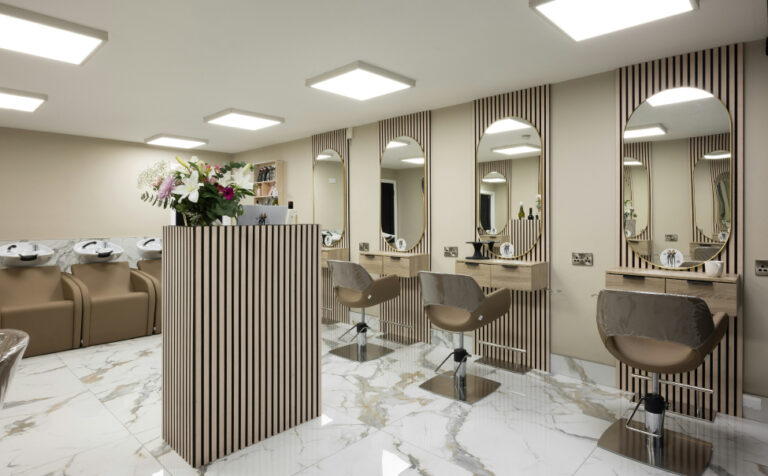
Porcelain, ceramic, stone and glass explained
Best Tile Atlanta Materials for Wet and Busy Rooms
Porcelain is dense, low absorption and available glazed or unglazed. Glazed porcelain provides the decorative surface and is often easy to maintain. Through-body or color-body products can make chips less visually obvious, though terminology and construction should be confirmed. Porcelain's density makes cutting and bonding more demanding; correct mortar and coverage are essential.
Non-porcelain ceramic
Glazed ceramic tile can be an excellent residential finish. It is often lighter and easier to cut than porcelain, which helps on backsplashes and walls. Floor use depends on the manufacturer's rating, glaze performance and location. Do not assume every wall tile is safe or durable enough for a floor.
Natural stone
Marble, limestone, travertine, slate and granite are natural materials with varying porosity, hardness and maintenance. Stone may require sealing, compatible cleaners and realistic expectations for etching or patina. Marble exposed to acidic kitchen ingredients can change even when sealed. A stone look in porcelain delivers more predictable care when authentic aging is not desired.
Glass tile
Glass reflects light and works well as backsplash or accent material. Installation requires appropriate setting materials, substrate preparation and cutting techniques. Some products are approved for pools or shower walls, while others are not intended for floors. Check the exact area-of-use.
| Material | Best uses | Main advantage | Watch for |
|---|---|---|---|
| Porcelain | Floors, showers, walls | Low absorption and durability | Correct bonding and cutting |
| Glazed ceramic | Walls, backsplashes, approved floors | Color, value and workability | Area-of-use rating |
| Natural stone | Feature floors and walls | Authentic variation | Etching, sealing and maintenance |
| Glass | Accents and backsplashes | Light and color | Special installation requirements |
| Mosaic | Shower floors and details | Conforms to slope | More grout maintenance |
Best tile choices for Atlanta kitchens
Kitchen floors face grit, spills, dropped cookware, chair movement and long periods of standing. A matte or lightly textured porcelain approved for interior floors is the most versatile option. It cleans easily, tolerates water and resists everyday wear. Avoid highly polished surfaces where cooking spills can create traction concerns.
Large-format porcelain
Tiles such as 12-by-24 formats reduce grout lines and suit contemporary kitchens. Larger formats require a flatter substrate because tile does not bend to follow waves. Layout should account for cabinets, islands, doorways and the most visible sight line. Offset limits may apply when long tiles have natural warpage.
Wood-look porcelain
Plank tile offers water resistance with a wood visual. It feels harder and cooler than hardwood or LVP and still needs grout. Vary printed faces, mix cartons and use an offset recommended for the tile's shape. A grout close to the plank color prevents the installation from looking striped.
Backsplashes
Backsplashes allow more freedom because they are not walked on. Glazed ceramic, porcelain, glass and appropriate stone all work. Consider how many outlets and corners create cuts. Highly textured tile behind a range can collect cooking residue. A beautiful display with deep relief may demand more cleaning than a smooth glazed surface.
Coordinate tile with countertops rather than forcing two strong patterns to compete. If the counter has dramatic veining, a quieter backsplash often creates a calmer room. For full-project planning, visit our kitchen and bathroom remodeling service.
See tile in your own kitchen light
We can compare scale, texture, grout and transitions beside your cabinets and countertops during a free in-home estimate.
Request a Free Tile Estimate →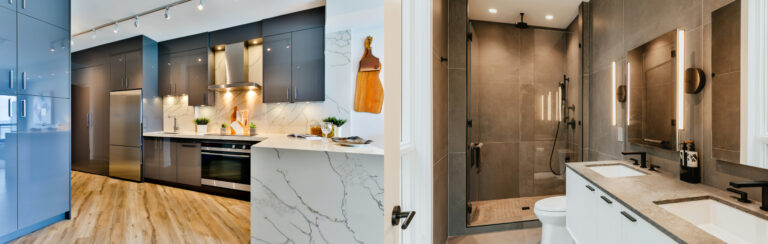
Best tile choices for bathroom floors and walls
Bathroom floors need a product approved for wet interior use, with traction appropriate to the household. Matte porcelain is a dependable base. Smaller formats add grout joints and fit compact rooms, while large-format tile creates fewer seams and a calm appearance. Large pieces do not remove the need for movement accommodation or flat preparation.
Main bathroom floor
Choose a surface comfortable under bare feet and manageable when damp. Strong texture can improve grip but trap residue; highly polished tile can become slippery. Look at the manufacturer's wet-use classification, not a visual guess. A medium tone hides hair and water spots better than pure black or white.
Walls and tub surrounds
Glazed ceramic or porcelain works well. Wall tiles can be larger and smoother because foot traction is irrelevant. Confirm substrate, waterproofing in wet zones and compatible mortar. Niches, valves and edges require advance layout so tiny cuts do not appear around focal points.
Powder rooms
Without a shower, a powder room offers design freedom. Ceramic floor tile rated for the application can be entirely appropriate. Patterned tile creates impact in a small area, but check alignment and cutting waste. The transition at the doorway should look intentional from the hall.
Laundry rooms
Porcelain tolerates routine water and appliance loads, but a supply-line failure can still damage the building. Use an appropriate pan or leak detection where feasible. The substrate must support concentrated weight and vibration. Plan appliance movement without rolling directly across an unprotected tile edge.

A tile shower is a complete water-management system
Tile and grout are decorative, durable finish surfaces. The shower becomes water managed through its membrane, sloped plane, drain connection, corners, penetrations and approved components. A beautiful porcelain surface does not compensate for missing waterproofing or a flat shower base.
Shower floor
Small mosaics commonly suit traditional sloped shower pans because sheets follow multiple planes toward the drain and frequent grout joints add texture. Select a product approved for shower floors and wet barefoot use. Some larger tiles can be used with linear drains and carefully designed single-plane slopes, but that is an assembly decision, not simply a larger style choice.
Shower walls
Large-format porcelain reduces grout joints and creates a slab-like appearance. The wall must be flat and the installation must achieve required mortar coverage. Heavy pieces demand suitable materials and technique. Book-match or vein direction should be planned before cutting.
Niches and benches
Every horizontal surface should shed water into the shower. Niches need waterproof corners and a layout that avoids awkward slivers. Bench penetrations and glass attachments should not casually compromise the membrane. Store product requirements, not only shampoo bottles, in the design conversation.
Steam showers
Steam environments have more demanding vapor and assembly requirements than ordinary showers. Use a complete method designed for that exposure. Materials, ceiling, penetrations and ventilation must be coordinated at the planning stage.
Slip resistance: choose for the actual use
Texture alone does not prove slip resistance, and no floor is slip-proof. Current industry classifications evaluate products for categories such as interior dry or interior wet use. Request the tile's technical data and match it to the location. A product suitable for a dry kitchen wall tells you nothing about a shower floor.
Maintenance changes traction. Soap film, cooking oil, body products and incorrect cleaners can make a tested tile slippery. Select a texture that the household can clean effectively. More grout joints may increase tactile grip but also create more surface to maintain.
Household factors
Children, older adults and anyone with mobility limitations deserve particular attention to wet traction, transitions and thresholds. Curbless showers reduce a step but require disciplined slope and waterproof design. Grab-blocking and support locations belong in the framing plan, not as afterthoughts drilled through finished tile.
Floor mats must have backing compatible with the tile and grout, and should not create a trip edge. Ventilation helps surfaces dry, but a bath fan does not replace safe material selection.
Plan the wet-area system before choosing a pattern
Get help coordinating tile, waterproofing, slope, grout and transition details before materials are ordered.
Schedule a Free Bathroom Consultation →
Tile size, layout and room proportion
Large tile does not automatically make a small room look larger, but fewer grout lines can reduce visual activity. Small tile does not automatically feel dated; thoughtfully selected mosaics add traction and detail. The best scale responds to room dimensions, drain geometry and focal surfaces.
Rectified versus pressed edges
Rectified tile is cut after firing for precise dimensions and can support narrower joints within manufacturer and industry limits. Pressed tile edges are softer and often need more joint width to accommodate size variation. A narrow grout joint is not a quality goal by itself; it must suit tile variation and substrate.
Layout planning
Centering every room may create narrow cuts at a tub, cabinet or doorway. Prioritize visible lines and avoid tiny pieces where possible. In showers, align niches and plumbing with the tile module. In kitchens, consider the backsplash area between counter and upper cabinets before establishing the first row.
Pattern and waste
Herringbone, diagonal and complex mosaics create more cuts and material waste than straight layouts. Veined tile needs sorting and rotation so repeated prints do not look artificial. Order from a consistent production run and inspect shade/caliber markings before installation.
Transitions also matter. Tile assembly thickness includes underlayment or membrane, mortar and tile. Plan the finished elevation against hardwood, LVP or carpet so reducers remain safe and visually quiet.

Grout selection changes appearance and maintenance
A matching grout allows tile to read as one field. Contrasting grout emphasizes every joint, including small layout variations. Mid-tone grout close to the tile is usually most forgiving around Atlanta red clay, kitchen residue and ordinary bathroom use. Bright white joints demand more frequent attention.
Cementitious grout
Traditional cement-based grout is familiar and available in many colors. Product formulations differ; some require sealer, while high-performance versions may include improved stain resistance. Water ratio, mixing, slaking, installation and curing affect color consistency and strength.
Ready-to-use and epoxy options
Alternative grouts can provide strong stain or chemical resistance, but have specific installation and cleaning procedures. Epoxy can be valuable in demanding settings and difficult for inexperienced installation. Confirm compatibility with the tile, especially porous stone or sensitive surfaces.
Movement joints are not grout joints
Buildings move. Perimeters, changes of plane and defined field locations need movement accommodation rather than rigid grout. Filling every corner with hard grout can lead to cracking. Flexible sealant color-matched to grout is commonly used where the selected method requires movement.
Clean with products compatible with tile and grout. Acidic cleaners can etch stone and damage some cement materials. Harsh residue removers are not routine maintenance. Good ventilation, wiping and correct chemistry are more effective than assuming sealer eliminates cleaning.
Why tile installation quality matters
Substrate stiffness and flatness
Tile is rigid. Excess wood-floor deflection contributes to cracks, and large formats reveal small plane irregularities. Existing floor covering is not automatically a suitable substrate. The assembly may need approved backer board, membrane, mortar bed or preparation based on framing and method.
Cracks in concrete
Concrete cracks should be evaluated before covering. Some are stable shrinkage cracks; others reflect ongoing movement. An appropriate crack-isolation method may help with eligible conditions, but no membrane can guarantee survival over uncontrolled structural movement.
Mortar coverage
Tile needs continuous support, especially in wet areas and under heavy loads. Industry guidance calls for greater coverage in wet settings than ordinary dry interiors. Installer trowel selection, directional combing, back buttering where appropriate and periodic lifting to verify contact matter more than how much mortar squeezes from joints.
Lippage and warpage
Lippage is the height difference between adjacent edges. Substrate flatness, tile warpage, layout offset and installation technique influence it. Leveling clips can help alignment but do not flatten a bad substrate or remove tile curvature.
Waterproofing inspection
Before finish tile hides the work, membrane seams, corners, penetrations and drain transitions should be complete under the selected system. Flood testing may be required or recommended for shower receptors. Photographing the assembly before covering can document important details.
Explore our professional tile installation service in Atlanta for help with floor, shower and backsplash projects.
A durable Atlanta tile design checklist
- Confirm the tile is rated for the exact floor, wall, shower or exterior use.
- Review wet-use slip classification for walked wet surfaces.
- Coordinate undertones with fixed cabinets, countertops and adjacent floors.
- View multiple pieces to understand shade and pattern variation.
- Plan grout color and joint width with the tile, not afterward.
- Locate niches, drains, fixtures and edge profiles on the layout.
- Calculate finished height and transitions.
- Confirm substrate and waterproofing methods before ordering.
- Include appropriate waste for pattern, cuts and future repairs.
- Keep spare tile labeled with manufacturer, collection, color and caliber.
Natural limestone looks and warm whites complement many Atlanta homes without chasing a short trend. Concrete looks suit modern remodels; patterned tile works best when surrounding finishes remain calmer. Wood-look porcelain connects to adjacent hardwood visually while remaining clearly its own durable material.
See completed inspiration in our gallery and confirm your community on the service areas page.
Choose tile as a system, not a sample
Get a project-specific recommendation for material, layout, grout, substrate and wet-area preparation.
Get My Free Tile Estimate →Maintenance and future repair planning
Routine tile care begins with removing grit before it abrades glaze or becomes embedded in grout. Atlanta red clay is strongly colored, so wipe entry soil promptly with the cleaner approved for the tile and grout system. In bathrooms, squeegeeing shower walls and running ventilation after use reduces soap and mineral buildup. Avoid assuming a strong acid is a shortcut: acidic products can attack cement grout, natural stone and some metal trims.
Sealer requirements vary. Many glazed porcelains do not need surface sealing, while cement grout or natural stone may. Sealer can slow absorption and staining; it does not eliminate maintenance or waterproof a shower. Test any treatment in an inconspicuous place because enhancer products may darken stone or change sheen.
Keep spare tile from the same shade and caliber lot. A future plumbing repair or impact-damaged piece is much easier to address when matching material exists. Store the product label, grout name, color and batch information with the spare pieces. Individual tile replacement can preserve an otherwise long-lived installation, but access and waterproofing must be considered carefully in wet areas. Drilling through a shower membrane to make a cosmetic repair can create a larger problem, so repairs should respect the full assembly rather than only the visible surface.
Frequently asked questions
Is porcelain or ceramic better for a bathroom?
Porcelain is usually favored for floors and showers because of low absorption. Glazed ceramic is excellent for many walls and approved residential floors.
What tile is best for a shower floor?
Choose a tile approved for shower floors and wet barefoot use. Small mosaics often conform to slope and provide more grout joints for traction.
Does grout waterproof a shower?
No. The membrane, sloped assembly, drain and penetrations manage water. Tile and grout are finish surfaces.
Is large-format tile good for kitchens?
Yes, when the substrate is sufficiently flat and installation achieves proper support. It produces fewer grout lines and a calm appearance.
What grout color is easiest to maintain?
A mid-tone near the tile color generally hides routine soil and variation better than bright white or sharp contrast.
Can tile be installed over cracked concrete?
The crack must be evaluated. Eligible stable cracks may use an appropriate isolation method; active structural movement requires correction and cannot be guaranteed by a membrane.
Is polished tile safe in a bathroom?
Use the product's wet-use classification. A polished wall tile may be appropriate while the same visual is unsuitable for a walked wet floor.
Published and reviewed July 27, 2026. Product data, current tile standards and site-specific assembly requirements control every installation.
Editorial references: The Tile Council of North America installation handbook documents recognized tile methods, while the EPA moisture-control guide explains why complete water-management assemblies matter.