
Laminate vs LVP Atlanta Guide: Which Flooring Is Better?
Two convincing wood looks, two different constructions. Compare how they perform around water, scratches, pets, sunlight and everyday family life.
Laminate and luxury vinyl plank can occupy the same price range and produce a similar wood look, but they solve different problems. Laminate is often chosen for a hard, scratch-resistant surface and crisp realism; LVP is often chosen for water tolerance and resilient versatility.
A laminate vs LVP Atlanta comparison should account for moisture exposure, scratch risk, comfort, subfloor condition and installation requirements. This laminate vs LVP Atlanta guide connects those differences to the rooms and routines in your home.
Laminate vs LVP Atlanta: The Short Answer
LVP is generally better for Atlanta kitchens, entries, laundry areas and basements where spills or moisture are the main concern. Quality laminate is often better for dry living rooms, bedrooms and home offices when scratch resistance, crisp wood texture and a rigid feel matter most. For pets, laminate may resist claw marks better while LVP handles wet paws and accidents more comfortably.
That is a starting point, not a universal ranking. Modern waterproof laminate systems are much more capable around everyday spills than old laminate, while premium vinyl surfaces can deliver strong scratch resistance. The exact product warranty, locking profile and approved rooms matter more than assumptions built from materials sold twenty years ago.
Atlanta adds several practical questions: Is the home on a slab or over a crawl space? Does the basement have a moisture history? Will red clay enter through the same doorway every day? Do west-facing windows create intense afternoon heat? Is the floor for two quiet bedrooms or one continuous first level with dogs and children? Answer those before comparing decorative samples.
If you have already decided on vinyl, our quality LVP buying guide explains its specifications in depth. Here we concentrate on choosing between the two categories.
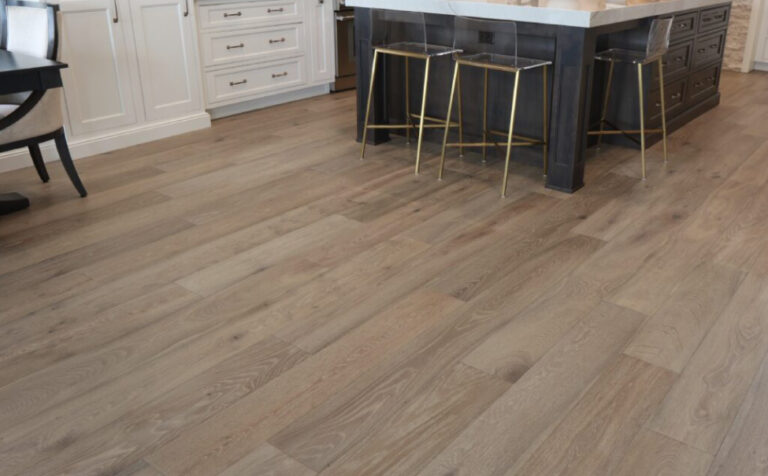
How laminate and LVP are constructed
Laminate vs LVP Atlanta Construction Differences
Traditional laminate combines a protective transparent wear surface, a decorative wood image, a dense wood-fiber core and a balancing backing. The hard top surface can resist routine abrasion and produce sharp texture. Water-sensitive fiber cores created laminate's old reputation, but current water-resistant and waterproof systems use improved core formulations, edge treatments and perimeter details to keep topical spills from reaching vulnerable material.
Those systems depend on the whole installation. A waterproof claim may require specific sealant at perimeters, transitions or wet-area edges. It does not mean every cut core can sit underwater indefinitely. Read the room approvals and cleanup time instead of applying one brand's claims to all laminate.
Luxury vinyl plank
LVP has a protective topcoat and transparent wear layer over a printed visual, supported by a resilient or rigid vinyl-based construction. Rigid products commonly use SPC or WPC cores; glue-down products are flexible and thinner. Because the plank material does not use a conventional wood-fiber core, it generally tolerates topical water without edge swelling.
“Waterproof plank” still does not mean waterproof building. Water can travel beneath an installation through perimeters or plumbing openings. Concrete vapor, leaks and flooding affect the subfloor, walls and indoor environment even if a plank appears unchanged.
| Category | Laminate | LVP |
|---|---|---|
| Core | Usually dense fiber or alternative rigid core | Vinyl-based flexible, SPC or WPC |
| Top surface | Hard transparent wear overlay | Topcoat and clear vinyl wear layer |
| Water tolerance | Product/system specific | Planks generally highly water tolerant |
| Scratch behavior | Often excellent surface resistance | Varies by coating and texture |
| Feel | Rigid, crisp | Ranges from firm SPC to softer WPC |
| Repair | Usually replace affected plank | Usually replace affected plank |
Water, humidity and Atlanta foundations
Everyday spills
LVP is the simpler category around recurring spills because its construction will not swell like ordinary fiberboard. That makes it attractive near exterior doors, pet bowls and kitchens. Modern water-resistant laminate can handle ordinary accidents when cleaned within the stated time, and some complete systems offer stronger waterproof coverage. The instructions determine whether the product belongs in a kitchen or bathroom.
Neither floor benefits from standing water. Wipe spills promptly so liquid cannot reach walls, trim, cabinetry or the substrate. A refrigerator supply leak may spread beneath both types before it becomes visible. Leak sensors and sound plumbing maintenance protect more than a waterproof marketing label.
Concrete slabs and basements
Both categories can have products approved below grade, but concrete must be tested and prepared. Vapor moving through a slab can affect underlayment, adhesives and indoor conditions. LVP often becomes the first recommendation for Atlanta basements because the plank is moisture tolerant; it does not authorize installation over active seepage or unresolved drainage.
Laminate over concrete may require a specified vapor retarder and perimeter treatment. The basement must remain conditioned. If a manufacturer's warranty excludes the conditions present, choose another system rather than hoping the floor's tight joints compensate.
Crawl spaces
A damp crawl space can raise wood-subfloor moisture and indoor humidity. LVP handles atmospheric humidity better than a wood-fiber laminate core, but excess moisture can still affect panels, fasteners and biological growth. Correct crawl-space water and humidity problems before covering the subfloor.
Choosing between two good options?
We can review your rooms, foundation, pets and maintenance priorities, then show laminate and LVP samples that actually fit the project.
Request a Free In-Home Comparison →
Scratches, dents, furniture and pets
High-quality laminate often earns the advantage for scratch resistance. Its hard overlay can withstand claws, chair movement and abrasive traffic impressively. Product ratings and pet warranties add context, but exclusions still matter. Deep impact, dragging metal or grit can damage any surface.
LVP surfaces range widely. A thicker wear layer provides more material before the design wears through, but does not guarantee that visible scratches will never occur. Coating chemistry, embossing and color affect day-to-day appearance. Dense SPC may resist indentation better than softer WPC, while heavy furniture on narrow feet can mark resilient flooring.
Dogs
For large active dogs in a mostly dry space, quality laminate can be compelling. For puppies, older pets or water bowls near the floor, LVP's spill tolerance may lead. Choose a matte mid-tone with visible grain because it disguises fur and light marks better than a smooth dark surface. Keep nails maintained and use a floor-safe tray beneath bowls.
Rolling office chairs
Repeated small-wheel loads stress both the wear surface and floating joints. Use manufacturer-approved hard-floor casters or a suitable protective mat without a reactive backing. Confirm that the product warranty permits the load. Subfloor flatness becomes especially important because rolling over a dip repeatedly flexes locks.
Furniture and appliances
Use wide, non-staining load-bearing protectors. Lift rather than drag. When moving a refrigerator or range, use rigid protective panels to distribute weight; a thin towel is not enough. Floating floors should not be pinned by fixed cabinets unless instructions explicitly permit it.

Comfort, sound and indoor experience
Laminate feels rigid and can create a crisp footfall similar to a thin prefinished wood floor. Underlayment influences sound, but extra cushion is not always allowed. Hollow sound often reflects subfloor irregularity, sparse furnishings or an unsuitable assembly rather than the decorative surface alone.
SPC vinyl also feels firm; WPC vinyl generally offers more resilience and warmth. A product with attached pad may feel quieter in a sample, but room acoustics depend on framing, ceiling below, floor area and furniture. Condo owners should obtain the association's required impact and airborne-sound documentation before purchase. Marketing statements such as “quiet” do not substitute for an accepted assembly.
Temperature and sunlight
Both feel warmer than porcelain tile at the same room temperature. Laminate's fiber core and underlayment may feel less cold over a slab, while WPC often feels warmest among common rigid vinyl products. Direct Atlanta sun introduces a different concern: vinyl products have temperature and dimensional limits; laminate also has environmental requirements and can fade depending on construction. Use window treatments where strong afternoon sun heats the surface and select an approved product.
Indoor-air questions
Review current product emissions certifications and documentation when indoor-air quality is a priority. Laminate and vinyl use different raw materials, but category-based assumptions are insufficient. Ask for the selected product's certification, care requirements and installation adhesive information rather than relying on vague “green” language.
Room-by-room winner
Living room: depends on household
Laminate wins for a hard wood-like feel and scratch-focused performance. LVP wins when the living room connects directly to a pool, patio or spill-prone kitchen. Either can look excellent in a large open plan when pattern repeats are managed.
Kitchen: LVP usually wins
LVP's water-tolerant construction makes it the easier recommendation. Waterproof laminate approved for kitchens can compete, particularly for homeowners prioritizing scratch resistance and a crisp visual. Follow perimeter sealing and cabinet instructions exactly.
Bedroom: laminate often wins
Bedrooms are dry and moderate traffic, allowing laminate's appearance and surface strength to shine. WPC LVP may win when softness and quiet feel matter. Carpet remains another strong option for warmth and sound.
Home office: laminate with load planning
Laminate's hard surface performs well under normal office use. Protect against rolling chairs as instructed. Glue-down LVP is also useful when rolling loads are expected because it avoids floating-lock flex, provided the substrate and adhesive system are appropriate.
Entry and mudroom: LVP wins
Wet shoes, umbrellas and Georgia red clay make LVP practical. Use large walk-off mats with approved backing and remove grit before damp cleaning. Porcelain tile may offer even greater long-term toughness for a dedicated mudroom.
Basement: LVP usually wins
After moisture testing and correction, LVP is normally more forgiving. Approved waterproof laminate may work in a proven dry conditioned basement, but its edge and perimeter requirements deserve careful review.
Bathroom and laundry: LVP or tile
Use only products explicitly approved for the room. LVP does not replace waterproofing around a shower or repair a plumbing risk. Standard laminate should remain out of recurring wet conditions. For a fully coordinated wet room, explore our kitchen and bathroom service.
Match flooring to every room—not one label
Get practical recommendations for connected spaces, wet areas, stairs and transitions during a free estimate.
Schedule My Free Flooring Estimate →
Installation requirements they share
Most residential laminate and rigid LVP products float by locking together over a prepared substrate. They therefore share three critical needs: flatness, perimeter expansion space and freedom from fixed objects that pin movement. Neither should be used to conceal structural problems.
Subfloor flatness
Dips cause boards to flex under traffic, stressing joints and creating movement or noise. Humps prevent rows from lying correctly. Measure against the selected manufacturer's tolerance. Preparation may include securing panels, sanding seams, grinding concrete or using approved patch compounds.
Moisture and vapor management
Wood subfloors and concrete require the tests specified for the assembly. An attached pad is not automatically a vapor retarder. Some products permit or require a separate membrane; others prohibit additional underlayment. Combining unapproved layers can soften support or void coverage.
Expansion and transitions
Maintain space at walls, pipes, door frames, cabinets and other fixed surfaces. Large areas and doorways may require transition moldings. Plan floor height at tile, carpet, exterior doors and appliances. Cutting doors after installation is avoidable when elevations are reviewed first.
Pattern layout
Use multiple cartons and distribute repeated plank faces. Avoid obvious H-joints, stair steps and very short end pieces. Dry planning protects appearance and can reduce waste. A centered layout is not always best if it leaves narrow rows at a highly visible wall.
Learn more about professional laminate installation and LVP installation.

Which looks more realistic?
Premium examples in both categories can be convincing. Laminate traditionally benefits from a rigid image surface that supports crisp embossing and detailed wood texture. LVP technology has improved rapidly, with larger print-film libraries, painted bevels and registered embossing available in better collections.
Judge pattern repeat across at least six to ten boards. One attractive plank does not show how often a bold knot will recur. Place samples flat in daylight and evening lighting. Very dark floors reveal Atlanta pollen, light pet hair and footprints. Very gray floors may turn blue beside cream stone or warm cabinetry. Natural and medium oak tones are flexible and forgiving.
Plank dimensions affect the room. Wide, long boards feel calm in open spaces but can make a small hall layout difficult. Bevels define individual boards; high-contrast bevel color can appear striped. Matte surfaces hide micro-scratches more readily than gloss.
Neither is genuine hardwood. If natural variation, repair by sanding and long-term refinishing matter most, compare engineered and solid hardwood instead.
Cost, lifespan and repair value
Laminate and LVP overlap widely in price. Entry-level material in either category may sacrifice visual variety, lock strength or support. Premium waterproof laminate can cost as much as quality rigid LVP. The installed price includes removal, disposal, leveling, moisture work, underlayment, transitions, stairs, base trim and furniture logistics.
Neither category is conventionally refinished. Damaged planks are replaced when accessible and matching stock exists. A floating floor may need disassembly from the nearest wall, while a glue-down LVP plank may allow localized work. Keep a carton from the original run in a conditioned storage location.
Think in fit and cost per year. Laminate that scratches less in a dry dog-heavy family room may outlast a bargain vinyl. LVP that survives kitchen spills without edge swelling may outlast unsuitable laminate. Subfloor preparation often adds more service life than upgrading one marketing tier while ignoring dips.
Warranty length deserves context. Read coverage for water duration, scratches, pets, sunlight, rolling loads, wet mopping and commercial use. Installation errors and moisture intrusion are commonly excluded. A detailed short warranty can be more meaningful than a long headline with narrow definitions.
Choose laminate if… choose LVP if…
Your space is dry and conditioned; scratch resistance is the leading need; you prefer a rigid wood-like feel; a detailed embossed visual appeals to you; and the product's water limitations fit your cleaning habits.
Spills, wet shoes or basement use lead the decision; you want resilient comfort; the product is approved for the slab and sunlight; or a glue-down installation better serves rolling loads and repair access.
Ask these final questions before ordering:
- Which risk matters most: water, scratches, dents, sound or sunlight?
- Is the product approved for every connected room?
- What does the warranty define as waterproof or pet damage?
- Will the subfloor meet flatness and moisture limits?
- Is additional underlayment required, permitted or prohibited?
- Are matching transitions and stair parts available?
- How many unique plank faces appear?
- Who handles furniture, appliances and hidden preparation?
- Can extra cartons be retained for repair?
See real-world inspiration in our gallery and check our metro Atlanta service areas.
Make the choice with samples in your own home
Compare laminate and LVP beside your cabinets, furniture and natural light, backed by a project-specific installation plan.
Get My Free In-Home Estimate →Maintenance differences after installation
Both floors benefit from frequent dry removal of Atlanta pollen, red-clay grit and pet hair. Use a soft vacuum setting or dust mop before damp cleaning so particles do not become abrasive paste. Laminate generally requires a carefully wrung pad and immediate spill cleanup according to its water warranty. LVP tolerates damp cleaning more comfortably, but excess liquid can still travel around edges and into the building.
Never assume steam, vinegar, ammonia, oil soap, abrasive powder or a universal polish is approved. Steam introduces heat and moisture at joints; polish can create a cloudy layer that attracts soil; harsh chemistry can change sheen. Follow the selected manufacturer's cleaner list. Place breathable, non-staining protectors under furniture and verify mat backing because rubber or latex can discolor some vinyl surfaces. At exterior doors, choose enough mat depth for both feet to contact the surface before reaching the new floor. These habits narrow the real-life performance gap between categories and protect whichever option you choose.

Frequently asked questions
Is laminate or LVP better for Atlanta homes?
LVP is usually better where water exposure leads, while quality laminate often excels in scratch-focused dry rooms. The specific product, substrate and household decide.
Which is better for dogs?
Laminate often has excellent scratch resistance. LVP handles accidents and wet paws more easily. Compare finish, texture, joint strength and written pet coverage.
Which feels more like hardwood?
Premium laminate often feels rigid and supports crisp wood texture. WPC vinyl is softer and warmer. Genuine hardwood remains different from both.
Can laminate go in a basement?
Only use a product explicitly approved below grade after slab testing and preparation. LVP is often more forgiving but also needs a suitable dry substrate.
Is waterproof laminate the same as LVP?
No. Their cores and performance systems differ. Waterproof laminate relies on its protected surface, joints and often perimeter details; LVP uses vinyl-based construction.
Which is easier to repair?
Both generally require plank replacement. Access depends on floating versus glue-down installation, room layout and whether matching spare stock exists.
Which handles direct sun better?
It is product-specific. Review temperature and UV guidance for the exact laminate or LVP and manage intense windows with appropriate treatments.
Published and reviewed July 27, 2026. Current manufacturer instructions and site-specific conditions govern every installation.
Editorial references: Compare laminate performance concepts through the NALFA product certification standards and review resilient-flooring categories and rigid-core certification information from the Resilient Floor Covering Institute.